Social Skills Builder for Kids: A Practical Workbook for Raising Confident, Empathetic Children
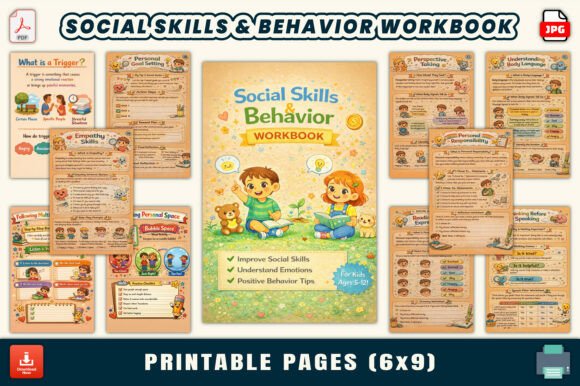
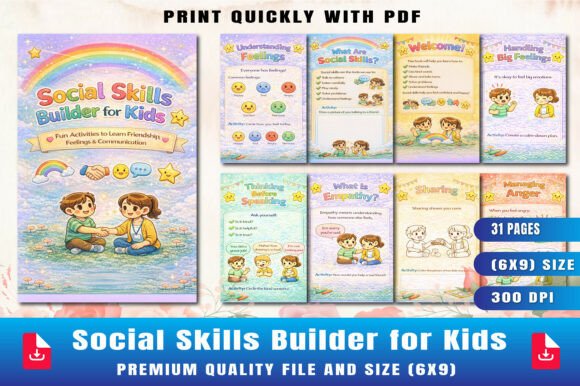
Every parent, teacher, or counselor knows the moment: a child stands at the edge of a playground, unsure how to join a game. Or they struggle to name the storm of feelings inside after a tough day. Social skills don't always come naturally. They require guidance, practice, and a safe space to explore. That's where the Social Skills Builder for Kids becomes an invaluable tool. This 30-page interactive workbook, designed with bright visuals and kid-friendly language, transforms abstract social concepts into concrete, actionable exercises. It's not just another activity book; it's a structured pathway toward friendship, confidence, and meaningful communication.
Understanding the Real Challenges Children Face Today
Children navigate a complex social world, both online and offline. Many encounter difficulties that, without support, can affect their self-esteem and relationships. Common hurdles include:
- Reading social cues: Recognizing facial expressions, body language, and tone of voice is a learned skill. Some children need explicit teaching to understand when someone is sad, frustrated, or excited.
- Managing big emotions: Anger, disappointment, or anxiety can overwhelm a child, leading to outbursts or withdrawal. Learning to name and regulate these feelings is essential.
- Initiating and maintaining conversations: Knowing how to start a dialogue, ask questions, and listen actively builds the foundation for friendships.
- Sharing, taking turns, and cooperating: Group settings demand patience and flexibility—skills that require repeated practice.
- Developing empathy and respect: Understanding another person's perspective and treating others with kindness is a cornerstone of healthy relationships.
- Handling conflict and problem-solving: Disagreements happen. Children benefit from a clear, repeatable process to work through issues calmly.
These challenges are not signs of failure. They are normal developmental stages. However, without intentional support, children may feel frustrated, isolated, or misunderstood. The Social Skills Builder for Kids directly addresses each of these areas, offering a gentle, engaging way to build competence and confidence.
How the Social Skills Builder for Kids Workbook Provides Solutions
This resource stands out because it translates complex social-emotional learning into simple, colorful activities. Each of the 30 pages targets a specific skill using clear language and interactive prompts. Rather than lecturing, it invites children to draw, write, reflect, and practice. The workbook covers a comprehensive range of topics, including understanding feelings, reading facial expressions, using kind words, listening skills, starting conversations, making friends, sharing and taking turns, empathy and respect, managing big emotions, problem-solving steps, asking for help, classroom and playground manners, being a good sport, giving compliments, personal space, respecting differences, daily social skills challenges, and confidence and self-esteem building.
For example, a child struggling with emotional regulation can work through the "Managing Big Emotions" page, which might include a simple breathing exercise or a feelings checklist. A child who finds group play difficult can practice the "Sharing and Taking Turns" activity, which uses relatable scenarios to reinforce patience. The workbook doesn't just tell children what to do; it gives them a chance to try it in a low-pressure, fun context.
Practical Applications for Different Settings
The flexibility of this workbook makes it suitable for multiple environments. Here's how different users can approach it:
Parents and caregivers can use it as a bonding activity at home. Sitting down together for 10–15 minutes a day to complete a page opens natural conversations about feelings and friendships. Parents often find that the workbook gives them a structured way to discuss topics they might not know how to start. For instance, the "Understanding Feelings" page can help a child articulate what they experienced during a tough day at school, turning a potentially abstract concept into a shared family discussion.
Teachers and classroom aides can integrate the workbook into morning meetings, social-emotional learning (SEL) blocks, or small group interventions. The pages are designed to be accessible for a range of ages (roughly 4–10 years old) and can be used as warm-ups, discussion starters, or independent work. In a classroom setting, the "Classroom and Playground Manners" page can reinforce expectations in a positive, child-centered way. Teachers appreciate that the workbook aligns with core SEL competencies and offers ready-to-use material without extensive prep time.
School counselors and therapists often use the Social Skills Builder for Kids as a supplementary tool during one-on-one or group sessions. The structured yet flexible format allows them to target specific goals, such as conversation skills or emotional identification, while keeping the child engaged. The "Problem-Solving Steps" page, for example, provides a clear framework that a counselor can refer back to during role-play or real-life conflict resolution. The workbook also serves as a tangible record of progress, which can be shared with parents or included in treatment notes.
Homeschooling families find this resource particularly valuable because it fills a gap in many curricula: explicit social skills instruction. Parents can easily incorporate a page into their daily routine, pairing it with literature, art, or outdoor play. The "Daily Social Skills Challenges" page encourages children to practice a specific skill throughout the day, reinforcing learning in real-world situations.
Examples of Real-World Outcomes
When children engage with this workbook consistently, the benefits often extend beyond the page. Consider a child who struggles with giving and receiving compliments. After working through the "Giving Compliments" activity, they might start offering genuine praise to a sibling or classmate. This small shift can improve peer relationships and boost the child's own sense of social competence. Similarly, a child who learns to recognize facial expressions through the workbook's exercises may become more attuned to their friends' emotions, leading to deeper, more empathetic connections.
The "Confidence and Self-Esteem Building" page encourages children to identify their strengths and celebrate small wins. For a child who feels shy or anxious, this can be transformative. They begin to see themselves as someone who can succeed socially, which motivates further practice. The workbook's positive, affirming tone helps children internalize the idea that social skills are learned, not innate—and that everyone can improve with effort.
Another common outcome is improved ability to manage conflict. The "Problem-Solving Steps" page teaches a simple sequence: identify the problem, think of solutions, choose one, try it, and reflect. When a disagreement arises on the playground, children who have practiced this process are more likely to resolve it independently or ask for help appropriately. This reduces teacher or parent intervention and empowers children to be solution-oriented.
Recommendations for Getting the Most Out of the Workbook
To maximize the impact of the Social Skills Builder for Kids, consider the following approaches:
- Use it consistently but flexibly: Aim for a few pages per week, but allow the child to choose which skill they want to explore. Autonomy increases engagement.
- Model the skills yourself: Children learn by watching. When you use kind words, listen actively, or manage your own emotions, you reinforce what the workbook teaches.
- Pair activities with real-life practice: After completing a page on "Starting Conversations," give the child a chance to initiate a greeting with a neighbor or a friend. Real-world application solidifies learning.
- Discuss the scenarios together: Don't just hand the workbook to the child. Talk about the examples, ask open-ended questions, and share your own experiences. This turns a worksheet into a meaningful conversation.
- Celebrate progress: When a child uses a skill from the workbook, acknowledge it with specific praise. "I noticed you took turns so patiently today. That's exactly what you practiced!"
- Adapt for different ages and abilities: The workbook is designed for a broad age range. Younger children may need help reading the prompts, while older children can complete pages independently. Use the JPG files to display activities on a tablet or smartboard for group use.
Important Considerations When Using This Resource
While the workbook is a powerful tool, it works best as part of a broader social-emotional learning approach. No single resource can address every child's unique needs. For children with significant social anxiety, developmental delays, or trauma histories, professional guidance from a counselor or therapist is essential. The workbook can support that work, but it should not replace individualized intervention when needed.
Also, remember that social skills develop over time. Patience and repetition are key. A child may not master "Empathy and Respect" after one activity, but repeated exposure through different pages and real-life practice builds deep understanding. The workbook's structure encourages revisiting concepts from various angles, which supports long-term retention.
Who Can Benefit Most from This Workbook
The Social Skills Builder for Kids is ideal for children ages 4 to 10, but it can be adapted for older children who need foundational support. It's especially helpful for:
- Children who are shy or anxious in social situations
- Those who struggle with peer relationships or making friends
- Children with ADHD, autism spectrum traits, or other conditions that affect social processing
- Siblings learning to navigate family dynamics
- Any child who would benefit from a structured, positive introduction to emotional intelligence
In a world that increasingly values collaboration, communication, and empathy, investing in a child's social skills is one of the most meaningful gifts we can offer. The Social Skills Builder for Kids workbook provides the tools, structure, and encouragement children need to grow into confident, kind, and socially aware individuals. Whether used at home, in the classroom, or in a therapeutic setting, this resource turns abstract concepts into everyday habits. And with its bright, colorful layout and interactive format, it feels more like play than practice—which is exactly how meaningful learning should feel.