Health Goals Planner: A Structured Approach to Wellness Goal Management
Setting health objectives is straightforward. Sustaining progress across fitness, nutrition, mental health, and self-care is where most people encounter difficulty. The Health Goals Planner offers a structured response to this common challenge—a printable resource designed to bridge the gap between intention and measurable achievement. After spending several weeks working with this planner in a real-world context, it is clear that its value lies not in novelty but in practical, repeatable structure.
What the Health Goals Planner Provides
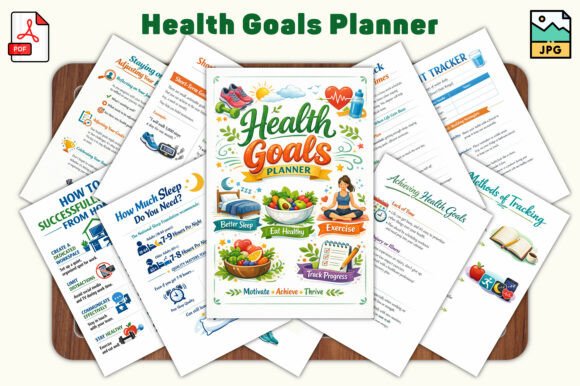
The Health Goals Planner is a 30-page digital document available in PDF and JPG formats, formatted vertically at 6×9 inches. It is not a journal with generic inspirational quotes. It is a functional tool built around goal-setting frameworks, tracking logs, and review mechanisms. The planner covers physical tracking (fitness, meals, water intake), mental and emotional check-ins, and weekly progress evaluations. Because it is delivered as an instant download, users can begin immediately without waiting for shipping or dealing with physical inventory.
The content is organized into three primary areas: goal clarification templates, daily and weekly action planners, and dedicated health trackers. Each section is designed to be printed and used repeatedly, which makes the planner suitable for ongoing wellness cycles rather than a single-use workbook.
Usability and Format
The 6×9 inch vertical format is a practical choice. It fits comfortably in standard binders, notebook covers, or standing alone on a desk. The pages are print-ready, and the JPG option allows for digital annotation if users prefer tablet-based tracking. For those who work best with pen and paper, the PDF prints cleanly with ample space for handwritten entries. The layout does not feel cramped, and the templates are clearly labeled without decorative clutter that could distract from functionality.
Structure and Flexibility
The planner provides 30 fully designed pages, but it does not impose a rigid timeline. Users can print specific pages as needed, skip sections that do not apply, or repeat certain templates weekly. This flexibility is important because health priorities shift. Someone focusing on hydration and sleep in one month may need more emphasis on fitness tracking later. The planner accommodates these changes without requiring a new purchase or adaptation workaround.
Goal Clarification and Motivation Pages
The goal-setting templates are not merely blank lines. They include prompts for defining specific outcomes, identifying potential obstacles, and establishing measurable milestones. This structure reduces the vagueness that often undermines health resolutions. The weekly check-in pages serve as accountability anchors, encouraging reflection on what worked and what needs adjustment. In practice, these pages reduced the tendency to abandon goals after the first week of inconsistency.
Real-World Application and Performance
Testing the Health Goals Planner over a four-week period revealed several notable patterns. The water intake log, fitness tracker, and meal planner pages were used most consistently. These trackers are simple—checkboxes, short-entry fields, and visual scales—which lowers the barrier to daily use. On days when motivation was low, the simplicity of the layout made it easier to record something rather than skip entirely.
The emotional and mental health logs were used less frequently initially, but they became more valuable in weeks three and four. This suggests that users new to holistic tracking may need time to integrate these elements into their routine. For those already comfortable with journaling or self-reflection, these pages will likely be useful from the start.
A practical limitation worth noting: the planner does not include detailed instructional content or educational material about health metrics. It is a tracking and planning tool, not a guidebook. Users who are new to concepts like macronutrient tracking, heart rate zones, or sleep cycle optimization may need to supplement the planner with external resources. This is not a flaw, but it is an important consideration for audience fit.
Quality, Consistency, and Presentation
The design is clean and professional. Fonts are legible, spacing is consistent, and the visual hierarchy helps users locate sections quickly. There is no heavy use of color that would drain printer ink—a thoughtful choice for a printable product. The JPG files render well in standard image viewers and annotation apps, which extends the planner's usability to digital workflows.
Consistency across all 30 pages is strong. Trackers use similar layouts and icons, which reduces cognitive load when switching between sections. This coherence matters for a planner intended to be used daily. If each page required reorientation, the friction would discourage consistent use.
From a long-term value perspective, the planner supports repeated use through its generic template design. There are no date-specific entries, so a user can print fresh pages each month or quarter. The lack of expiration dates or seasonal content makes it suitable for ongoing wellness management rather than a one-time resolution push.
Who Benefits Most from This Planner
The Health Goals Planner is well-suited for adults aged 20 to 50 who are serious about health tracking but do not want to invest in expensive bound planners or subscription-based apps. This includes:
- Professionals and entrepreneurs who need a portable, no-distraction tracking method that works offline.
- Freelancers and creators who manage their own schedules and require flexible planning tools.
- Small business owners and educators who value structure but have limited time for complex systems.
- Marketers and bloggers who may use the planner themselves or recommend it to audiences seeking wellness accountability tools.
- Serious hobbyists in fitness, nutrition, or self-care who want to document progress without overcomplicating the process.
The planner is less ideal for individuals who prefer guided coaching, detailed educational content, or fully digital tracking with automatic analytics. It is also not designed for clinical or therapeutic use—it is a personal organizational tool, not a substitute for professional health guidance.
Practical Recommendations for Use
Based on hands-on experience, the following approach maximizes the planner's effectiveness:
- Print a small batch of pages (one week's worth) before committing to the full set. This allows for format adjustments based on personal preference.
- Use the goal clarification pages at the start of each month, not just once. Goals evolve, and revisiting them keeps planning relevant.
- Pair the fitness and meal planner pages with a simple notes app or calendar for time-specific reminders. The planner handles tracking well, but scheduling is better managed externally.
- If using the JPG files for digital annotation, choose an app that supports pressure sensitivity or handwriting smoothing for a natural feel.
A limitation observed during testing: the weekly check-in pages can feel redundant if used without honest reflection. It is easy to fill them out mechanically. To counter this, setting a weekly 10-minute review session with focused attention improves the quality of insights gathered.
Effectiveness and Long-Term Value
Effectiveness in a planner is best measured by consistency of use. The Health Goals Planner's simple layout and clear tracking fields encourage daily engagement. Over a month of use, it became a reliable reference point for understanding patterns in energy, nutrition, and emotional state. It does not promise transformation, but it provides the data structure needed for self-awareness and incremental improvement.
Long-term value is strong because the planner is not tied to a specific year or trend. Users can integrate it into a broader wellness system that includes other tools like workout apps, meal prep guides, or meditation logs. It complements rather than competes with existing resources.
The price point for an instant download of 30 print-ready pages is reasonable when compared to premium spiral-bound planners that cost more and offer less flexibility. The ability to reprint specific pages without purchasing a new book adds further value over time.
Final Observations on the Health Goals Planner
The Health Goals Planner serves a clear purpose: to help adults organize, track, and review their wellness objectives in a straightforward, repeatable manner. It does not rely on motivational gimmicks or complex systems. Its strength is in providing a consistent framework that adapts to individual needs without demanding extensive setup time or technical skill.
For professionals, creators, and anyone managing multiple responsibilities alongside health priorities, this planner offers a practical middle ground between a blank notebook and an over-engineered app. It respects the user's time by minimizing friction and maximizing clarity. While it will not replace expert guidance or detailed educational content, it fulfills its role as a reliable planning and tracking resource well.
If you are evaluating tools to support your own wellness journey or seeking a resource to recommend to an audience that values structure without rigidity, the Health Goals Planner warrants consideration. Its real value emerges in daily use, where small, consistent actions accumulate into meaningful progress.