Vision Board Dream Planner: A Structured Approach to Manifesting Your Goals
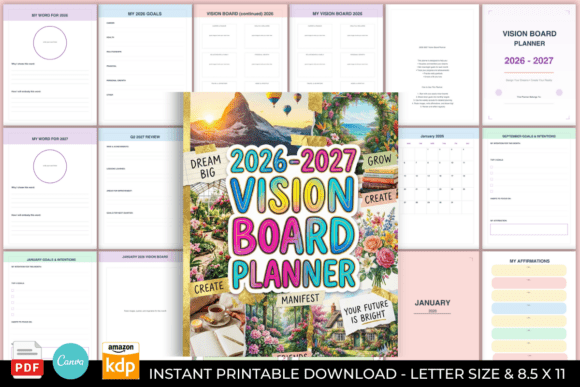
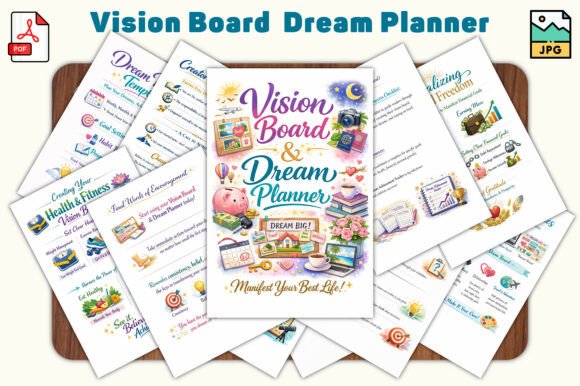
Most people carry a vague sense of what they want—better health, a more fulfilling career, deeper relationships—but few ever translate those desires into tangible outcomes. The gap between wishing and achieving is rarely about motivation; it is almost always about structure. A vision board, in its earliest form, was little more than a collage of magazine cutouts pinned to a corkboard. While inspiring, that approach lacked the scaffolding needed to turn inspiration into action. The Vision Board Dream Planner bridges that gap by combining the emotional power of visual goal-setting with the practical discipline of structured planning. Available as a vertical 6×9″ PDF and JPG instant download, this 33-page resource offers a complete system for clarifying intentions, mapping progress, and staying accountable across weeks and months.
Why Visualization Alone Is Not Enough
Visualization has long been championed by athletes, entrepreneurs, and performers as a tool for priming the mind for success. Studies in sports psychology confirm that mentally rehearsing an action can improve physical performance. Yet the research also shows that visualization works best when paired with deliberate practice and concrete planning. The brain responds to images and emotions, but it requires structure to translate those signals into behavior change. The Vision Board Dream Planner is designed with this dual principle in mind: it honors the creative, emotional side of dreaming while providing the templates, prompts, and tracking systems that turn dreams into habits. Each of its 33 pages serves a distinct function, from vision mapping to weekly action steps, ensuring that users do not just imagine their future—they build it.
Core Components of the Planner
Understanding what is inside the planner helps clarify how it supports different goal types. The pages fall into several functional categories, each addressing a specific stage of the goal-realization process.
Vision Board Creation Pages
These are the heart of the planner. Dedicated spaces allow users to arrange images, keywords, and affirmations into a cohesive visual representation of their desired future. Unlike a generic collage, these pages include guided prompts that ask users to articulate why each image matters and what emotion it represents. This reflective layer deepens the connection between the user and their goals, making the vision board a tool for self-discovery rather than mere decoration. For example, a user aiming for financial independence might include an image of a debt-free life alongside a written prompt about the freedom they seek. The Vision Board Dream Planner structures this process so that every image is tied to a specific intention.
Goal-Setting Templates
Moving from vision to execution requires clarity. The planner includes templates that guide users through setting specific, measurable, achievable, relevant, and time-bound (SMART) goals. Each template breaks a larger aspiration into smaller milestones, with space to assign deadlines and identify potential obstacles. A professional aiming for a promotion, for instance, can map out the skills they need to develop, the projects they need to lead, and the networking steps required. The templates also include reflection prompts at the end of each week and month, encouraging users to assess what worked and adjust their approach. This iterative cycle is critical for long-term progress.
Weekly and Monthly Planning Layouts
Consistency is where most dreamers falter. The weekly and monthly spreads in the planner are designed to integrate with the broader goal templates, so users can see how their daily actions align with their larger vision. Each weekly page includes a section for top priorities, habit tracking, and a small space for a weekly affirmation drawn from the vision board. The monthly layout offers a bird's-eye view of milestones completed and tasks ahead. A user working on a creative project, such as writing a novel, can use the monthly page to track word count targets and the weekly page to schedule writing sessions. The vertical 6×9″ format makes these pages easy to carry in a bag or place on a desk, encouraging regular use.
Reflection and Review Sections
The final pages of the planner are dedicated to review. These sections prompt users to look back at the previous month or quarter and evaluate what moved them closer to their vision and what held them back. The reviews are not judgmental—they are analytical, designed to surface patterns. A user might notice that they consistently miss their exercise goals on travel days, leading them to adjust their planning rather than abandon the goal. This feedback loop transforms the planner from a static document into a dynamic system that evolves with the user.
Practical Applications Across Different User Groups
The Vision Board Dream Planner is flexible enough to serve a wide range of users, from busy professionals to creative entrepreneurs to individuals focused on personal development. Examining a few use cases illustrates how the planner adapts to different needs.
Professionals Seeking Career Advancement
A mid-career professional aiming for a leadership role can use the vision board pages to visualize themselves in that position—leading meetings, making strategic decisions, earning a higher salary. The goal-setting templates then help them identify the competencies they need to develop, such as public speaking or financial analysis. Weekly planning ensures they dedicate time to skill-building activities, while monthly reviews track progress toward their target role. The planner becomes a career development tool that sits alongside performance reviews and professional development plans.
Creators and Entrepreneurs Launching Projects
Creators—writers, artists, designers, small business owners—often struggle with the unstructured nature of their work. The Vision Board Dream Planner provides a framework that respects creative freedom while imposing enough structure to prevent procrastination. A graphic designer launching a new brand identity can use the vision pages to collect visual references and mood boards, then use the goal templates to break the project into phases: research, concept development, client presentations, and final delivery. Weekly layouts help them allocate time for each phase, and the reflection sections allow them to note which creative conditions produced their best work.
Individuals Focused on Personal Growth and Wellness
Health and wellness goals—whether related to fitness, nutrition, mental health, or relationships—benefit enormously from the planner's holistic design. A user aiming to reduce stress might create a vision board page filled with images of calm environments, meditation, and time with loved ones. The goal-setting templates help them define specific actions: ten minutes of daily meditation, a weekly unplugged evening, monthly check-ins with a therapist. The weekly habit tracker reinforces consistency, and the monthly review helps them identify stressors that disrupt their routine. Over time, the planner becomes a personal health journal that tracks not just actions but emotional states and insights.
The Role of Format and Accessibility
The planner is delivered as an instant download in both PDF and JPG formats, with a vertical 6×9″ layout. This format choice has practical implications for usability. The 6×9″ size strikes a balance between portability and readability—large enough to write in comfortably, small enough to fit in a standard bag or folder. The vertical orientation aligns with how most people naturally hold documents and books, making the planner intuitive to use. The PDF version is ideal for printing at home or at a local print shop, allowing users to create a physical copy they can write on by hand. The JPG files offer flexibility for digital users who prefer to annotate using a tablet or tablet stylus, or who want to incorporate the pages into digital planning apps like GoodNotes or Notability. This dual-format approach ensures that the planner works for both analog and digital workflows, removing the barrier of format preference.
Why a Dedicated Vision Planner Works Better Than a Generic Notebook
A common question is whether a specialized vision planner offers advantages over a standard blank notebook. The answer lies in design. A blank notebook provides freedom, but it also places the burden on the user to create structure from scratch. Most people, when faced with a blank page, either procrastinate or default to unstructured lists that lack the reflection and alignment needed for sustained progress. The Vision Board Dream Planner eliminates this friction by providing pre-designed layouts that guide the user through each phase of the goal journey. The prompts, sections, and review cycles are based on established principles from cognitive psychology and behavioral design, such as implementation intentions and commitment devices. The user does not need to know these theories—the planner embeds them into the pages, so the user benefits from them automatically.
Moreover, the visual nature of the planner taps into the brain's preference for images over text. Research in neuroscience shows that the brain processes visuals sixty thousand times faster than text, and that images are more likely to be stored in long-term memory. By combining images with written goals and action plans, the planner creates a multi-sensory experience that reinforces commitment. A user who sees their vision board every morning is reminded of their deeper purpose before they even look at their task list.
Considerations for Effective Use
Any tool is only as effective as the effort invested in it. To get the most out of the Vision Board Dream Planner, users should approach it with a few principles in mind. First, clarity before action. Rushing to fill out the goal templates without first spending time on the vision board pages can lead to goals that are disconnected from genuine desires. The planner is designed to be used sequentially—start with vision, then move to goals, then to weekly plans, then to review. Second, consistency over intensity. Spending thirty minutes once a month is less effective than ten minutes each day. The planner's compact format supports daily engagement, and the weekly spreads are intentionally simple to encourage regular use. Third, honesty in reflection. The review sections are most valuable when users are truthful about what is not working. Identifying a misaligned goal early allows for course correction rather than frustration.
Users should also consider their preferred medium. Those who thrive on handwriting and physical materials will benefit from printing the PDF and using pens, markers, and cut-out images. Those who work primarily on digital devices may prefer the JPG files for use with a tablet and stylus, or even for integration into a digital planning app that supports image layers. Some users may even combine both—using a printed vision board on their wall and a digital version of the weekly planner on their tablet. The flexibility of the format supports these hybrid approaches.
Observations from Practice
People who use structured vision planners often report a shift in how they relate to their goals. Instead of feeling like distant fantasies, goals become concrete projects with clear next steps. The act of pasting an image onto a vision page and then writing a corresponding action plan creates a psychological link between the dream and the effort required to achieve it. Over time, this link strengthens what psychologists call goal commitment—the internal resolve to persist even when obstacles appear. The Vision Board Dream Planner, with its 33 pages of thoughtfully designed layouts, provides the infrastructure for this transformation. It does not promise quick results or magical thinking. Instead, it offers a reliable system for anyone ready to move from wanting to doing.
Whether used by a professional mapping a career pivot, a creator launching a passion project, or an individual building healthier habits, the planner serves as both a mirror and a map. It reflects the user's deepest aspirations while charting a practical course toward them. The vertical 6×9″ format and instant digital delivery make it accessible to anyone with a printer or a tablet. And the 33 print-ready pages ensure that users have everything they need in one place—no supplements, no extra downloads, no guesswork. For those who are serious about turning their vision into reality, the Vision Board Dream Planner offers a proven path forward, one page at a time.