Unlocking the Potential of a Ramadan Planner Canva KDP for Personalized Worship
Ramadan is a month of profound spiritual reflection, self-discipline, and community connection. For many, the challenge lies not in intention but in organization—balancing daily prayers, Quran reading, meal preparation, and family commitments while striving for spiritual growth. This is where a well-designed Ramadan planner becomes indispensable. The Ramadan Planner Canva KDP offers a unique solution: a fully customizable template that bridges the gap between traditional planning and modern digital flexibility. By leveraging the power of Canva, creators and users alike can tailor every aspect of the planner to fit individual needs, transforming a static document into a dynamic tool for worship and productivity.
Why Customization Matters in Ramadan Planning
No two Ramadan experiences are identical. A busy professional may prioritize time-blocking for prayers and work, while a parent might focus on meal planning for suhoor and iftar. A student could emphasize Quran reading and dua lists, whereas a community organizer may need trackers for iftar parties or group reflections. The Ramadan Planner Canva KDP addresses this diversity by offering a fully editable Canva template. Users can adjust fonts, colors, and layouts without design expertise, ensuring the planner aligns with personal aesthetics and practical requirements. This level of customization is particularly valuable for creators on KDP (Kindle Direct Publishing) who want to offer differentiated products or for individuals seeking a planning tool that resonates with their spiritual journey.
The ability to edit each page means that users are not confined to pre-set structures. For example, the “Ramadan Goal” section can be expanded to include specific milestones like completing a certain number of Quranic chapters or memorizing short surahs. Similarly, the “Daily Ramadan Planner Day 1-30” pages can be restructured to highlight morning and evening reflections, integrating personal notes alongside tracking elements. This flexibility enhances usability, making the planner a living document that evolves with the user’s intentions throughout the month.
Key Features and Their Real-World Applications
The comprehensive feature set of the Ramadan Planner Canva KDP covers nearly every aspect of Ramadan planning. Each feature serves a practical purpose, addressing common challenges faced during the month.
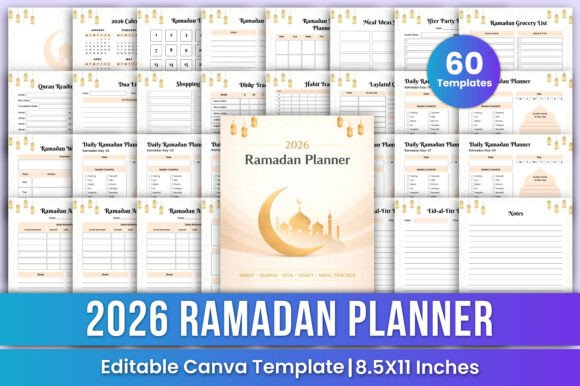
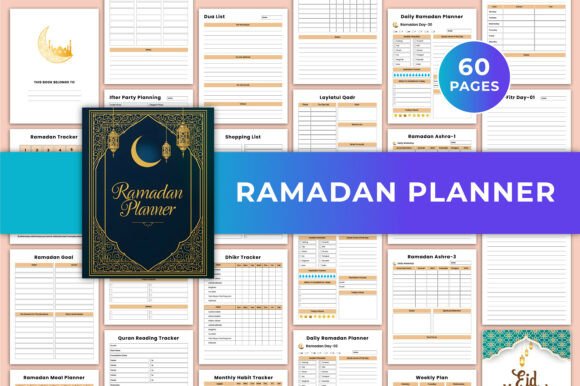
- Ramadan Tracker and Goal Setting: The “This Book Belongs To” page personalizes ownership, while “Ramadan Tracker” and “Ramadan Goal” sections allow users to define and monitor spiritual objectives. For instance, a user might set a goal to pray Tarawih every night and use the tracker to record consistency. This creates accountability and motivation.
- Meal Planning and Preparation: With “Ramadan Meal Planner,” “Meal Ideas Suhoor,” “Meal Ideas Kids Lunch,” “Meal Ideas Ifter,” and “Ifter Party Planning,” the planner simplifies one of the most demanding aspects of Ramadan. Busy parents can plan nutritious suhoor and iftar meals in advance, reducing daily stress. The “Ramadan Grocery List” further streamlines shopping, preventing last-minute runs to the store. For those hosting community iftars, the “Ifter Party Planning” page helps coordinate menus, guests, and logistics.
- Spiritual Tracking: “Quran Reading Tracker,” “Dua List,” “Dhikr Tracker,” and “Laylatul Qadr” pages support focused worship. The Quran reading tracker can be divided into daily portions, and the dua list encourages intentional supplication. The dhikr tracker helps build consistent remembrance habits, especially during the last ten days. The “Laylatul Qadr” section reminds users to maximize worship on this special night.
- Habit and Weekly Planning: “Monthly Habit Tracker” and “Weekly Plan” pages foster long-term consistency. Users can track habits like morning adhkar, charity, or avoiding negative speech. The “Ramadan Ashra 1-3” and “Ramadan Week 1-4” sections break down the month into thirds, aligning with the themes of mercy, forgiveness, and salvation. This structured approach helps users maintain focus as Ramadan progresses.
- Eid Preparations and Reflection: “Eid-al-Fitr Day 1-3” pages allow for post-Ramadan celebration planning, including prayers, gatherings, and gratitude. “Important Notes” and “Notes Pages” provide space for reflections, lessons learned, and goals for the year ahead.
These features are not isolated; they work synergistically. For example, the “Daily Ramadan Planner Day 1-30” can integrate entries from the meal planner, Quran tracker, and dhikr tracker into a single daily overview. This holistic view reduces fragmentation and helps users stay aligned with their spiritual roadmap.
How Creators and Users Benefit from Canva Templates
The Ramadan Planner Canva KDP is designed for two primary audiences: content creators and end users. For creators—such as designers, bloggers, or KDP authors—the template offers a ready-to-market product. They can customize the planner with their branding, add affiliate links, or bundle it with other resources. The 62-page printable PDF file (US Letter size 8.5 × 11 inches) is immediately usable, and the included high-quality JPG PNG files allow for digital distribution or printing. This saves hours of design time while ensuring a professional finish.
For end users, the editable Canva template means they can adapt the planner to their workflow. A teacher might add classroom activities for children, while a healthcare professional could include medication reminders after iftar. The no-bleed design ensures easy printing at home or through a service. The flexibility also supports different learning styles: visual learners can use icons and colors, while structured individuals may prefer bullet journals style layouts. This user-centric approach aligns with modern expectations for customizable digital tools.
Practical Implementation: From Setup to Daily Use
Implementing the Ramadan Planner Canva KDP is straightforward. Creators can download the template from Canva, edit text and images, and export as a PDF for KDP upload. End users can duplicate the template to their Canva account and modify as needed. Here is a sample workflow:
- Before Ramadan: Set up the “Ramadan Goal” and “Monthly Habit Tracker” pages. Define two or three key intentions, such as completing the Quran once or increasing charity. Fill in the “Ramadan Grocery List” with staple items to minimize shopping during the month.
- First Week: Start using the “Daily Ramadan Planner Day 1-30” pages. Each day, note suhoor and iftar meal plans, Quran reading progress, and dhikr count. Use the “Dua List” to write specific supplications for that day. The “Ramadan Ashra 1” section provides focus for the first ten days of mercy.
- Mid-Ramadan: Review the “Weekly Plan” to adjust for shifting energy levels. For example, if fatigue increases, simplify meal ideas or reduce extra activities. The “Ramadan Week 2-3” pages help maintain momentum. The “Quran Reading Tracker” can be adjusted to catch up if missed days occur.
- Last Ten Days: Intensify worship using the “Laylatul Qadr” page. Schedule extra prayers, longer dhikr sessions, and charity. The “Eid-al-Fitr Day 1-3” pages can be prefilled with plans for takbeer, family gatherings, and feasts.
This workflow demonstrates the planner’s adaptability. Users are not forced into a rigid schedule but can iterate based on real-time needs. The “Important Notes” and “Notes Pages” serve as a journal for capturing insights, making the planner a keepsake for future Ramadans.
Advantages Over Generic Planners
Standard planners often lack the specialized focus required for Ramadan. They may include generic monthly views or habit trackers but miss elements like suhoor meal ideas, dhikr trackers, or Laylatul Qadr reminders. The Ramadan Planner Canva KDP fills this gap by integrating Islamic spiritual practice with daily planning. The editable Canva nature adds another layer of advantage: users can remove pages they don’t need (e.g., if they don’t host iftar parties) and add pages from other templates by copying and pasting. This modularity is rare in fixed planners.
Consider a user who is also a content creator. They can use the planner for personal growth and then repurpose it as a product for their audience. For example, a parenting blogger might customize the “Meal Ideas Kids Lunch” section with their own recipes and sell the planner on KDP. This dual use multiplies the value. The high-quality JPG PNG files ensure that digital versions look crisp on tablets or phones, allowing users to plan on the go via mobile Canva.
Considerations for Maximum Benefit
To fully leverage the Ramadan Planner Canva KDP, users should approach it as a guide rather than a strict schedule. Start by identifying the most relevant features. For someone new to Ramadan planning, the “Daily Ramadan Planner Day 1-30” and “Quran Reading Tracker” provide a solid foundation. Experienced users may dive into “Monthly Habit Tracker” and “Ramadan Ashra 1-3” for deeper reflection.
Printing the planner requires attention to the no-bleed specification, which means 8.5 × 11-inch paper with standard margins works perfectly. If using digitally, the editable Canva format allows for hyperlinking between pages in PDF viewers. For example, link the “Dua List” to each daily page for quick access. This technical flexibility enhances usability without additional cost.
Supporting Spiritual Growth Through Structured Tracking
The ultimate goal of any Ramadan tool is to deepen faith and connection with Allah. The Ramadan Planner Canva KDP supports this by making spirituality tangible. The “Dhikr Tracker” encourages consistent remembrance, while the “Laylatul Qadr” section prompts special worship planning. By recording progress, users can see their growth and identify areas for improvement. For instance, a user might notice they performed dhikr more consistently in the first week and then set strategies for the second week. This data-driven reflection aligns with Islamic principles of self-accounting (muhasaba).
For parents, the planner includes a “Ramadan Planner” page for kids’ lunch, which can be adapted into a children’s version with simple tasks like “read one ayat” or “help set the table.” This makes Ramadan a family journey. The notes pages also allow parents to record their children’s milestones, creating a cherished memory book.
Beyond Ramadan: Long-Term Value
After Ramadan ends, the planner remains useful. The “Eid-al-Fitr Day 1-3” pages can be archived as keepsakes. The “Important Notes” and “Dhikr Tracker” habits can be transitioned into post-Ramadan life, supporting continued spiritual practice. Some users may reuse the same template for the next Ramadan with updated goals, demonstrating the sustainable design.
For creators on KDP, the planner can be part of a product suite. They might create separate planners for different audiences—such as students, families, or reverts—by customizing the template. The 62-page count allows for comprehensive content without being overwhelming, and the editable format means updates for future Ramadans are quick.
Technical Considerations and Output Options
Product details specify that the planner includes “Fully Editable Canva Template,” “62-Pages Printable PDF File,” “US Letter Size 8.5 × 11 inches,” “High-Quality JPG PNG Files,” and “No Bleed.” For creators, this means the planner is production-ready. The no-bleed aspect is crucial for KDP print-on-demand, as it avoids cutting issues. The JPG and PNG files are useful for digital planners that layer over PDF annotation apps like GoodNotes or Notability. Canva’s cloud-based editing ensures compatibility across devices.
Users should note that while the template is fully editable, some design elements like images or fonts may be from Canva’s free library, requiring a Canva Pro subscription for commercial use if redistributing. For personal use, the free version suffices. This is a common consideration in Canva templates and is clearly communicated in product details.
Real-World Examples of Use
- A college student uses the planner to balance exams with Ramadan. They add a study tracker to the “Daily Ramadan Planner Day 1-30” pages and use the “Meal Ideas Suhoor” for quick, nutritious breakfasts. The “Dua List” becomes a stress-relief tool during finals.
- A homemaker with three kids relies on the “Meal Ideas Kids Lunch” and “Ramadan Grocery List” to simplify iftar and suhoor. The “Ifter Party Planning” helps organize weekly family gatherings. The “Monthly Habit Tracker” records each child’s Quran reading progress.
- A writer and content creator customizes the planner with a minimalist color scheme and sells it on KDP. They add a bonus page on “Spiritual Journaling” using the “Notes Pages” section. The planner generates passive income while supporting others in their faith journey.
- A mosque volunteer uses the “Ramadan Goal” and “Laylatul Qadr” pages to plan community events. They modify the planner to include volunteer schedules and fundraising targets, then distribute it digitally to the congregation.
These examples illustrate the planner’s versatility across demographics and purposes. The key is the editable nature, which removes barriers to entry for non-designers.
Observations on Planner Use and Effectiveness
Effective planning during Ramadan often hinges on simplicity and consistency. The Ramadan Planner Canva KDP avoids overcomplication by offering focused sections rather than bloated features. Users often find that the “Ramadan Tracker” and “Quran Reading Tracker” become their most-used pages, as they provide immediate feedback on progress. The “Weekly Plan” acts as a mid-course correction tool, while “Ramadan Ashra 1-3” encourages thematic reflection—for example, focusing on mercy in the first ten days, forgiveness in the second, and salvation in the last.
One observation from users is that the planner works best when integrated into a digital ecosystem. Syncing the PDF with cloud storage ensures access at home, work, or the mosque. The high-quality JPG PNG files also allow for printing portions on sticky notes or index cards for quick reference. This hybrid use—digital editing plus analog elements—caters to diverse preferences.
Another consideration is cultural adaptation. The “Meal Ideas” sections can be edited to include regional dishes, such as samosas for South Asian iftars or dates and laban for Middle Eastern meals. This cultural sensitivity makes the planner relevant globally, which is valuable for KDP creators targeting international audiences.
Future Trends in Ramadan Planning Tools
The demand for customizable digital tools continues to grow, particularly in the niche of faith-based planning. The Ramadan Planner Canva KDP represents a shift from passive consumption to active creation. Users are no longer satisfied with static layouts; they want ownership over design and content. This trend is likely to expand, with more templates incorporating AI-assisted suggestions or community-sharing features. For now, the editable Canva format offers a balanced approach—low learning curve with high output.
Creators can stay ahead by updating templates annually based on user feedback. For example, adding more pages on mental health during Ramadan or integrating with habit-tracking apps. The underlying product details—62 pages, US letter size, no bleed—provide a solid foundation that can be expanded without overwhelming the core experience.
Ultimately, the Ramadan Planner Canva KDP serves as more than a scheduling tool. It is a companion for spiritual growth, a creative outlet for customization, and a practical resource for daily life. By understanding its features and applying them to real-world contexts, users can transform their Ramadan into a more focused, fulfilling, and organized journey of faith. Whether used by an individual seeking deeper connection or a creator building a business, this planner embodies the essence of personalized worship in the digital age.