1000 Law of Attraction Prompts Canva Kdp: A Practical Tool for Mindset Alignment and Intentional Manifestation
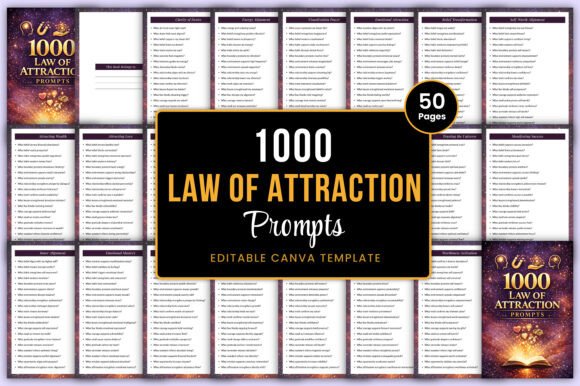
Navigating the journey of personal development and law of attraction work often requires consistent reflection, intentional questioning, and a structured approach to rewiring thought patterns. 1000 Law of Attraction Prompts Canva Kdp offers a ready-to-use collection designed to support exactly that. Whether you are a coach creating client handouts, a self-publisher building a printable journal, or an individual looking for daily prompts to deepen your manifestation practice, this resource combines volume with flexibility. The prompts are housed in a fully editable Canva template, and the final output is a high-quality, print-ready 6x9 inch PDF. This article explores what makes this collection worth considering, who can benefit most, and how it performs in real-world use.
What Makes This Collection Worth Your Time
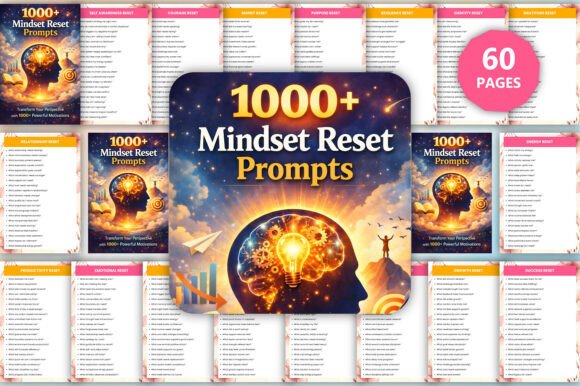
A thousand prompts is a substantial quantity, but quantity alone does not guarantee usefulness. What distinguishes 1000 Law of Attraction Prompts Canva Kdp is the deliberate categorization across core areas of manifestation work. The prompts are not random; they are grouped into themes that mirror the key stages of mindset shifting: intention setting, belief rewiring, gratitude cultivation, visualization, love and success focus, confidence building, and goal clarity. This structure allows users to select relevant prompts for specific phases of their personal work or to offer a guided progression in a journal or planner. The editable Canva link adds practical value by allowing customization of colors, fonts, layout, and even the wording of prompts if desired. This means the same base content can adapt to different branding, aesthetics, or languages, making it a versatile asset for creators and professionals.
Core Features and Their Practical Application
Understanding how each feature translates into daily use helps clarify the collection's real utility. Below, each thematic area is examined in terms of its purpose and typical application.
Manifestation Intention Setting
Intention setting is the foundational step in any law of attraction practice. This subset of prompts guides users to define their desires clearly and align their thoughts with those outcomes. For example, a prompt might ask, "What does it feel like to already have your desire fulfilled?" or "Write a one-sentence intention for today that supports your bigger goal." These prompts are brief but designed to provoke focused reflection. In a coaching program, they can serve as starting points for weekly goal-setting sessions. In a personal journal, they help maintain clarity over time.
Belief Rewiring and Mindset Shifts
Limiting beliefs often block manifestation progress. This category directly addresses subconscious patterns by prompting users to identify, question, and replace unhelpful beliefs. A typical prompt: "What belief about money is holding you back, and what is a more empowering alternative?" The prompts here are practical for both self-work and therapeutic-like journaling. For a content creator repurposing these for social media or printables, this section offers material that resonates deeply with audiences actively working on self-improvement.
Gratitude and High-Vibration Thinking
Gratitude is widely recognized as a tool for raising emotional frequency. The prompts in this group go beyond simple listing; they encourage appreciation of specific experiences, people, and personal growth. Examples range from "Name three small pleasures you experienced today" to "What challenge from last month are you now grateful for?" These prompts are easy to use daily and can be integrated into morning or evening routines. For a planner or journal, they provide a consistent anchor that keeps the user in a positive mindset.
Visualization and Future Self Clarity
Visualization is a core law of attraction technique, but it can be vague without guided questions. This category helps users imagine their desired reality in vivid detail. Prompts like "Describe your ideal daily routine five years from now" or "What does your future self know that you haven't learned yet?" encourage mental rehearsal. In a coaching context, these prompts can be used during visualization exercises. For a self-published workbook, they add depth and interactive value.
Love, Success, and Abundance Focus
Relationships, career growth, and financial prosperity are common areas of focus. The prompts here are tailored to each domain without being overly generic. For example, "What would a successful career look like for you beyond just income?" or "How can you receive love more openly today?" This specificity makes the collection useful for niche products like a relationship journal or an abundance planner. The prompts avoid vague affirmations and instead push toward concrete reflection.
Confidence and Self-Worth Alignment
Self-doubt can undermine even the best manifestation efforts. Prompts in this section address self-belief and inner value. Questions like "What evidence from your past shows that you are capable of achievement?" or "Write a compassionate response to your inner critic about today's challenges." These are straightforward yet effective. For a coach or therapist, they serve as excellent conversation starters. For an individual, they build resilience over time.
Goal Clarity and Inspired Action
Manifestation without action often remains fantasy. This set of prompts bridges the gap between intention and real-world steps. They ask users to list actionable steps, identify potential obstacles, and commit to small daily actions. Example: "What is one inspired action you can take today that aligns with your desire?" The prompts are practical and grounded, which helps users avoid the trap of only visualizing. They work well in a goal-setting planner or as part of a weekly review routine.
Who Benefits Most from These Prompts
The versatility of 1000 Law of Attraction Prompts Canva Kdp means it can serve multiple audiences. For entrepreneurs and small business owners creating digital products for platforms like Amazon KDP or Etsy, this collection provides a complete content base. With editing in Canva, you can quickly produce a law of attraction journal, a gratitude workbook, a mindset planner, or a coaching workbook without starting from scratch. The print-ready PDF format ensures professional output.
Coaches, therapists, and educators can use selected prompts for client sessions, group workshops, or handouts. Because the prompts are written in neutral, inclusive language, they work across different coaching niches—life coaching, business coaching, relationship coaching, and self-help classes. Freelancers and bloggers can also extract individual prompts to create social media content, email sequences, or blog post ideas focused on mindset and manifestation.
For individuals seeking a personal growth tool, the collection offers enough variety to keep the practice fresh for months. The prompts are not tied to any particular spiritual or religious framework, making them accessible to secular audiences as well. The editable format also allows users to remove or reorder prompts based on their current focus.
Quality, Usability, and Flexibility
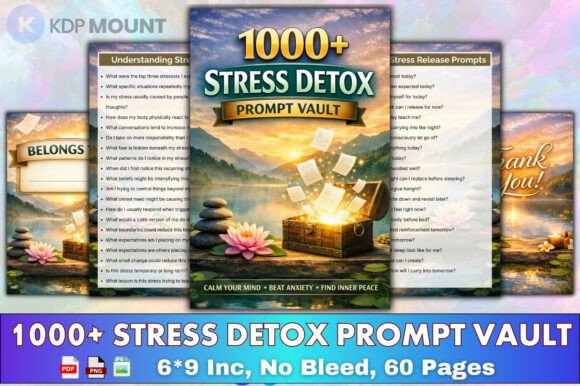
The physical output quality is defined by the 6x9 inch PDF format, which is a standard size for printed journals and workbooks. The design, before editing, is clean and professional. Since the template is editable in Canva, users can adjust colors, fonts, and layout to match their brand or personal preference. This flexibility is a significant advantage for those who need to differentiate their products or repurpose the content across multiple formats (digital, print, social).
In terms of consistency, the prompts maintain a clear, action-oriented tone throughout. There is no jarring shift in voice or complexity, which is important when compiling a book of 1,000 prompts. The length per prompt is manageable—usually one to three sentences—allowing for quick daily use. However, a potential limitation is that with such a large volume, some prompts may feel repetitive if used too frequently without curation. Users may want to pull selections rather than use the entire set at once. Despite that, the thematic grouping makes it easy to rotate categories and maintain engagement.
For KDP publishing, the file is ready to upload after customizing the cover (not included in this template) and reviewing the interior. The formatting is already set for a 6x9 trim, and the PDF is high-resolution. This saves hours of layout work. The Canva link is a practical touch, as it allows even non-designers to make changes without advanced software.
Practical Recommendations for Getting the Most Out of the Template
To maximize the value of this collection, consider these approaches. If you are creating a product, start by selecting prompts that align with a specific theme—for example, only gratitude and visualization prompts for a "30-Day Abundance Journal." Editing the color scheme and adding a consistent header style will create a polished final product. For personal use, print a few pages each week and commit to answering one prompt per day. Combine prompts from different categories to cover all aspects of your manifestation practice.
For coaches, integrate prompts into client homework assignments or use them as warm-up exercises during sessions. The belief rewiring and confidence categories are particularly effective for breaking through resistance. For content creators, extract two or three prompts per week for social posts, inviting audience engagement. The editable nature means you can brand each prompt image with your logo.
One aspect to consider is that the template does not include instructions or explanations for the law of attraction concepts. It is purely prompt-based. If you plan to sell the workbook, you may want to add introductory pages that explain how to use prompts effectively. This is a minor addition but can significantly enhance the perceived value.
Overall, 1000 Law of Attraction Prompts Canva Kdp is a solid, practical resource that delivers on its promise of volume and editability. Its strengths lie in its structured categorization, neutral tone, and flexible format. It suits professional creators who need ready content for high-demand niches and individuals who prefer guided reflection without the fluff. While it may require some curation to prevent repetition in daily use, the thematic groupings make that curation straightforward. For anyone looking to save time on content creation while maintaining depth and alignment, this collection offers a reliable foundation.