Mental Health Journal: A Practical Tool for Emotional Reflection and Balance
Finding a way to process emotions and maintain mental well-being often feels abstract. You may have tried talking to friends, scrolling through wellness apps, or simply hoping time would smooth things over. For many people, a structured yet flexible tool like a Mental Health Journal offers a middle path—something between the formality of therapy and the aimlessness of unstructured thought. This article explores what a Mental Health Journal offers, how it compares to other approaches, and how to decide if it fits your current needs.
What a Mental Health Journal Is and What Makes It Distinct
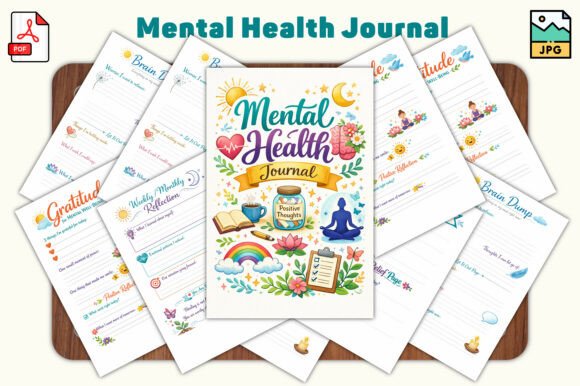
A Mental Health Journal is a print-ready, 6×9-inch vertical journal with 50 thoughtfully designed pages. It combines guided prompts with open space for free expression. Unlike a standard blank notebook, it provides gentle structure: emotional check-in pages, mood tracking reflections, and areas to track energy levels and patterns. The design intentionally avoids rigid rules—you can skip pages, write irregularly, and use the space however feels right.
What sets it apart is the balance between guidance and freedom. Many journals either overwhelm you with daily prompts or leave you staring at a blank page. This journal strikes a middle ground. The prompts are supportive without being prescriptive. They nudge you to check in with your emotional state, identify patterns, and build awareness, but they do not demand perfection or consistency.
The format also matters. It is available as PDF and JPG files for instant download, which means you can print pages as needed or use them digitally. This flexibility reduces the pressure to fill a whole notebook or stick to a linear format. You can use one page today, skip a week, and return when you feel ready.
Comparing the Mental Health Journal with Other Approaches
When evaluating whether this journal suits you, it helps to consider where it fits among broader options for emotional reflection and mental wellness. Below are several common alternatives and how they compare.
Unstructured Journaling in a Blank Notebook
Many people start with a plain notebook, writing whatever comes to mind. This approach offers total freedom, which can be liberating. However, it can also feel daunting. Without any prompts or structure, you may write for a few days, then stop because you do not know what to write next. The Mental Health Journal removes that friction. The guided prompts give you somewhere to start, while the open space still allows free expression. If you already enjoy unstructured journaling and do not feel stuck, a blank notebook might serve you well. If you find yourself starting and stopping, the gentle structure of this journal may help you build consistency.
Digital Journaling and Wellness Apps
Apps like Day One, Journey, or specialized mood trackers offer digital convenience, reminders, and data visualization. They can track patterns over time and offer privacy features. However, they also require screen time, subscriptions, and often involve notifications. For adults in their 20s to 50s who already spend hours on devices, a paper-based or print-ready journal offers a screen-free pause. The downloadable PDF format gives you the option to print or use digitally, so you can mix both worlds. If you prefer typing over handwriting or need data analysis, an app may be better. If you crave a tactile, slower experience, the Mental Health Journal provides that without sacrificing structure.
Therapy and Professional Counseling
Therapy offers personalized guidance from a trained professional. It is invaluable for deeper mental health challenges and trauma. A journal is not a replacement for therapy. However, it can complement it. Many therapists recommend journaling between sessions to track moods, identify triggers, and reflect on insights. The Mental Health Journal can serve as a bridge between sessions, helping you notice patterns you might otherwise forget by your next appointment. If you are in therapy, adding this journal may enhance your self-awareness. If you are not ready or able to access therapy, a journal provides a low-cost, self-paced starting point for emotional reflection.
Bullet Journals and Planner Systems
Bullet journaling is popular for productivity, habit tracking, and goal setting. It emphasizes rapid logging and customization. While it can be adapted for mental health, its primary focus is task management. The Mental Health Journal is designed specifically for emotional reflection, not productivity. If your goal is to track moods and process feelings rather than manage tasks, this purpose-built journal may serve you better. If you already run a bullet journal and want to integrate mood tracking into it, you could adapt your system, but it requires more effort. The Mental Health Journal removes that setup time.
Strengths and Tradeoffs of the Mental Health Journal
Every tool has strengths and limitations. Understanding these helps you decide if it fits your situation.
Strengths
Low-pressure structure. The prompts are designed to be supportive, not demanding. You do not have to write every day or answer every question. This makes it easier to return after time away.
Print-ready flexibility. The downloadable format means you can print as many copies as you like, use individual pages, or access them on a tablet. This reduces commitment and allows customization.
Purpose-built for emotional awareness. The journal incorporates emotional check-ins, mood tracking, and energy-level reflection. These elements are grounded in common therapeutic practices like cognitive behavioral therapy and mindfulness. They help you notice patterns over time.
Portable and simple. The 6×9-inch size fits in most bags. There are no batteries, notifications, or learning curves. You open the page and begin.
Tradeoffs and Limitations
No professional feedback. A journal cannot interpret your patterns or offer clinical advice. If you are struggling with serious mental health issues, a journal is not enough. It is a supplement, not a treatment.
Requires self-motivation. Even with prompts, you still need to sit down and write. Some people prefer the accountability of an app with reminders or a therapist with scheduled appointments.
Limited data analysis. Unlike apps that generate charts and trend lines, this journal relies on your own reflection and memory to see patterns. You may need to review your entries periodically to notice changes.
Paper-based constraints. If you prefer typing over handwriting, the print-ready format means you either print the pages or use a PDF annotation tool. Digital-first users may find it less convenient than a native app.
When the Mental Health Journal May Be the Right Choice
Based on its strengths, this journal suits several scenarios well.
- You are new to journaling. The structure reduces the blank-page anxiety. You have a starting point each time.
- You want a screen-free wellness practice. If you are trying to reduce screen time, a printed journal offers a tactile alternative to apps.
- You are in therapy and want to deepen reflection between sessions. The emotional check-in pages align with therapeutic goals and help you prepare for appointments.
- You value flexibility over rigidity. You can use one page today, three next week, and none the week after. There is no pressure to maintain streaks or fill every page.
- You prefer guided prompts over open-ended writing. The prompts give direction without being intrusive. They help you explore feelings you might otherwise avoid.
When You May Need Another Option
No single tool works for everyone. Here are situations where another approach may serve you better.
- You need clinical support. If you experience severe depression, anxiety, or trauma, a journal cannot replace therapy or medication. Seek professional help first.
- You thrive on data and trends. If you want automatic charts and statistical summaries of your mood over time, a digital app will give you more robust analysis.
- You prefer writing on a device. If handwriting feels slow or painful, a digital journal with keyboard input may be more comfortable. The PDF format allows digital annotation, but typing on a tablet or phone is less seamless than a dedicated app.
- You need external accountability. If you know you will not journal unless reminded, an app with notifications or a scheduled therapy session may provide the structure you need.
- You want a high degree of customization. If you like designing your own layouts, categories, and trackers, a bullet journal or a fully blank notebook offers more freedom. The Mental Health Journal provides a fixed set of prompts and layouts.
Practical Considerations for Making a Decision
Choosing a mental health journal is not about finding the best one in absolute terms. It is about finding the one that fits your habits, preferences, and goals. Consider the following factors.
Your Current Habit Level
If you have never journaled before, a structured journal like this reduces the barrier to entry. If you are already consistent with a blank notebook or an app, switching may not add value unless you want specific features like mood tracking.
Your Environment
Do you have a quiet space to write? Do you prefer paper or digital? The Mental Health Journal works well for people who enjoy handwriting and have a few minutes of uninterrupted time. If you are always on the move and prefer typing on a phone, a digital option might be more practical.
Your Emotional Goals
Are you looking to reduce stress, process a specific event, or build long-term self-awareness? The journal is better suited for ongoing reflection and pattern recognition than for acute crisis management. For immediate stress relief, breathing exercises or a quick walk may help more. For long-term growth, consistent journaling with guided prompts can build emotional literacy over time.
Budget and Commitment
The instant download format means no shipping costs and no waiting. You can try it immediately. If you find after a few pages that it does not suit you, you have not invested much. That low barrier to entry is a practical advantage. By contrast, a leather-bound journal or a subscription app requires more upfront commitment.
How to Use the Mental Health Journal Effectively
If you decide to try it, a few simple practices can help you get the most out of it without feeling pressured.
- Start small. Fill one emotional check-in page today. Write three sentences. That is enough.
- Skip pages when needed. If a prompt does not resonate, move on. The journal is yours to adapt.
- Review your entries monthly. Look back at your mood tracking and check-ins. Notice patterns. Are you more anxious on certain days? More energetic after specific activities?
- Pair it with another practice. Use the journal after a short meditation, a walk, or a cup of tea. This can make the reflection feel like a gentle ritual rather than a task.
- Be honest, not perfect. The journal is a judgment-free space. Write what you actually feel, not what you think you should feel.
Final Thoughts on Choosing a Reflection Tool
The Mental Health Journal occupies a specific and useful place among mental wellness tools. It offers guided structure without rigidity, emotional focus without clinical jargon, and flexibility without requiring a large time investment. It works well for people who want to slow down, check in with themselves, and build emotional awareness over time. It is not a replacement for professional care, nor is it the only way to journal. But for many adults navigating daily stress, emotional complexity, or the desire for greater self-awareness, it provides a gentle, practical starting point or a reliable companion.
When you evaluate any mental health tool, ask yourself: Does this fit how I actually live, think, and feel? Does it reduce friction or add it? Does it feel like a supportive space or an obligation? Answering those questions honestly will guide you toward the choice that supports your well-being, whether that is this journal, a different format, or a combination of approaches.