ADHD Emotional Regulation Workbook
If you live with an ADHD brain, you already know that emotions don't arrive gently. They land hard, fast, and often without warning. One moment you're fine. The next, a perceived slight, a forgotten task, or a sudden sensory overload triggers a cascade that leaves you exhausted for hours—or days. The ADHD Emotional Regulation Workbook was built specifically for this reality. It does not ask you to clamp down on your feelings or force a calm you don't possess. Instead, it offers a structured yet flexible way to notice what is happening inside your body, process it without judgment, and return to a place where you can function again. For professionals, creators, and anyone managing complex workloads, this workbook becomes a practical tool you can reach for before, during, or after the moments that knock you off course.
What the Workbook Actually Is
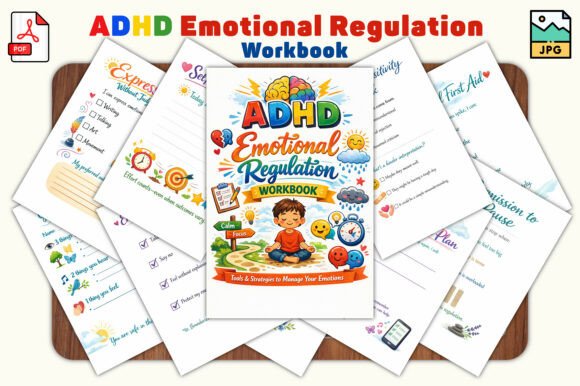
This is a 30-page printable and digital resource designed around the way ADHD brains actually experience emotion. It includes emotional check-ins, body awareness pages, nervous system calming exercises, grounding tools, rejection sensitivity awareness prompts, self-talk compassion exercises, and recovery planning pages. Every page stands alone, which means you do not need to work through it in order. You can open it to the section you need in that moment—whether you are mid-meltdown, recovering from a difficult conversation, or simply checking in before a high-stakes meeting. The workbook is therapy-adjacent, meaning it complements the work you might do with a professional, but it is equally effective as a standalone self-help tool. It does not demand perfection. It asks only that you show up as you are.
Where It Fits in Your Workflow
The most useful tools are the ones that integrate seamlessly into existing routines. The ADHD Emotional Regulation Workbook fits naturally at several points in a typical workflow for creators, marketers, freelancers, and business owners.
Before a High-Stakes Task or Decision
If you have an important proposal to write, a client call to lead, or a creative deadline looming, your emotional state directly affects your output. The workbook's emotional check-in pages let you take five minutes to scan your body and name what you are feeling before you begin. This simple act reduces the likelihood that an unexamined trigger will hijack your focus mid-task. You can pair this with a grounding exercise to settle your nervous system before you open your project management tool or start a difficult conversation. Over time, this pre-task ritual becomes a quality control step—one that protects both your work and your energy.
During Overwhelming Moments
No plan survives contact with reality. When a project hits a snag, a client pushes back, or your to-do list suddenly feels impossible, the workbook gives you somewhere to go. The triggers and emotional intensity tracking pages help you identify the exact source of the spike in real time. You are not trying to argue yourself out of the feeling. You are simply noting it. This act of observation creates enough distance to choose a next step rather than react impulsively. The nervous system calming exercises can be done in two to three minutes at your desk, in a bathroom stall, or in your car. They do not require silence or solitude—only a willingness to pause.
After Emotional Burnout or Rejection Sensitivity
Recovery is where most self-regulation tools fall short. They tell you to breathe and then expect you to move on. The ADHD Emotional Regulation Workbook includes dedicated recovery and reflection pages that respect how long it actually takes to rebound from an emotional event. After an episode of rejection sensitivity dysphoria (RSD) or emotional burnout, you can use the self-talk compassion prompts to counter the shame spiral that often follows. The emotional recovery and regulation plan pages let you document what helped, what did not, and what you might try next time. This creates a personal knowledge base that improves with every use. Over months, you build a reference of what actually works for your specific brain.
How It Interacts with Other Tools and Methods
The workbook does not exist in a vacuum. It works alongside the other systems you already rely on. If you use a digital calendar or task manager, you can schedule a recurring five-minute block for an emotional check-in before your most demanding recurring task. If you journal or use a bullet journal, the workbook's prompts can feed into your existing reflection practice. If you are in therapy, the workbook can help you bring more specific observations to your sessions—your therapist will appreciate the concrete tracking data you provide. If you use productivity methods like time blocking, the Pomodoro Technique, or GTD, the workbook becomes the emotional regulation layer that makes those systems actually sustainable for an ADHD brain. Without emotional regulation, no productivity system holds. This workbook fills that gap.
Practical Implementation Tips
Getting the most out of this workbook requires a few deliberate choices. Start by printing the entire set or keeping the digital file accessible on your phone and computer. Do not try to complete every page in one sitting. Pick one section—the emotional check-in or the grounding exercises—and use that page exclusively for one week. Let it become familiar before you add another. Place the printed workbook next to your workspace. If you work across multiple devices, keep a bookmark in the PDF that takes you to the page you use most often. The goal is to reduce friction so that reaching for the workbook feels easier than spiraling.
Another approach is to integrate the workbook into your weekly review routine. Every Sunday or Monday, spend ten minutes with the reflection and progress pages. Note patterns you observed over the previous week. Which situations triggered intensity? Which self-talk strategies actually helped? Over time, these weekly reviews will reveal your emotional rhythms. You might notice that your regulation capacity is lowest on Wednesday afternoons or highest on Monday mornings. Once you know that, you can schedule your most emotionally demanding tasks accordingly.
Pair with Physical Anchors
Some people find that the workbook works best when paired with a physical anchor. Keep a specific pen that you only use for this workbook. Place a small object—a stone, a keychain, a sticker—on your desk that reminds you to check in with yourself. When you see the object, you remember to open the workbook. This kind of environmental cue compensates for the executive function challenges that make it hard to remember to pause. The workbook becomes part of your physical space, not just an idea you carry in your head.
Factors for Long-Term Use
Consistency with emotional regulation tools is notoriously difficult for ADHD brains because the very thing you are trying to regulate is what makes you forget to use the tool. Plan for that. Accept that you will use the workbook intensely for a few days, then forget about it for two weeks, then come back. That pattern is normal. The workbook is designed to accommodate that. Because each page stands alone, you can pick it up after any gap and find immediate value. There is no progress bar to fill, no streak to maintain. The only measure that matters is whether it helped you in the moment you reached for it.
Usability also depends on format. If you prefer digital, keep the PDF open in a dedicated tab or app on your phone. If you prefer paper, print it on heavy paper and store it in a folder you can grab quickly. Some users create a small booklet by printing only the pages they use most and binding them with a ring. The goal is to make the tool feel like yours. Customize it. Write in the margins. Skip pages that do not resonate. The workbook is a framework, not a prescription.
Who Benefits Most in a Professional Context
Freelancers, solo entrepreneurs, and small business owners face a particular challenge. They have no manager, no team, no external structure to help them regulate when a difficult client email arrives or a project falls apart. The workbook becomes the co-regulation they do not have access to in a traditional workplace. It provides the pause, the perspective, and the recovery protocol that a supportive colleague might otherwise offer. For educators and creators who work with people, the workbook also indirectly improves the quality of your interactions. When you are more regulated, you respond rather than react. Your clients, students, or audience benefit from your emotional steadiness even if they never know the workbook exists.
Final Observations on Integration
The ADHD Emotional Regulation Workbook is not another thing to add to your list. It is a tool that makes everything else on your list easier to accomplish. When you regulate your nervous system before a difficult task, the task itself requires less effort. When you recover properly after an emotional hit, you return to your work faster and with more clarity. Over time, the workbook trains you to notice your own patterns, and that noticing is what eventually reduces the intensity of the emotional spikes themselves. You do not control your emotions. You understand them, soothe them, and let them move through you. That is the entire point. And this workbook gives you a practical, repeatable way to do exactly that.