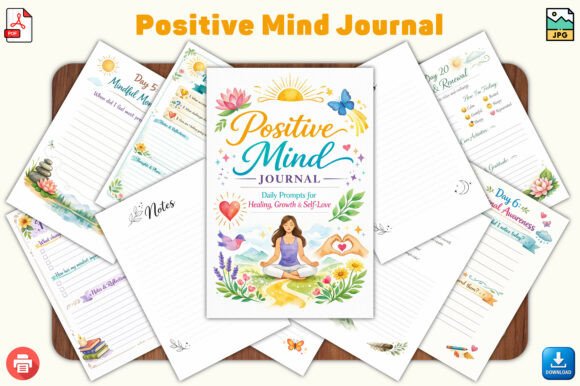
The Positive Mind Journal: A Structured Path to Daily Mindfulness and Emotional Resilience
In an era where mental clutter competes for attention from every direction, finding a reliable anchor for emotional balance has become less a luxury and more a daily necessity. The Positive Mind Journal enters this space not as another self-care trend, but as a deliberately crafted instrument for those who seek to cultivate clarity, gratitude, and a healthier mental posture through consistent, guided reflection. Rather than presenting an overwhelming blank slate, it offers a thoughtful framework that meets users where they are, whether they are stepping into journaling for the first time or returning to a practice that has lapsed.
Understanding the Role of Structured Journaling in Modern Wellness
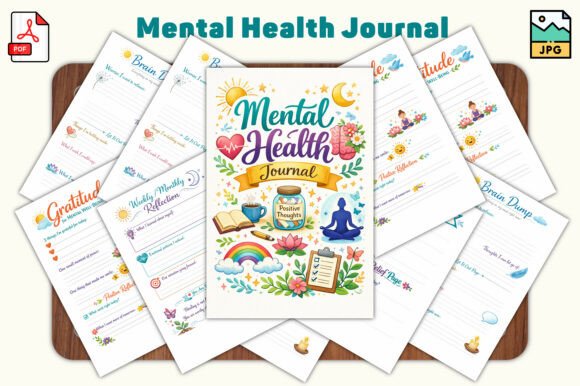
Journaling has long been recognized for its therapeutic potential, but the difference between a sporadic diary entry and a sustained reflective practice often comes down to structure. The Positive Mind Journal addresses this gap by providing 30 clearly defined pages, each built around a set of prompts that nudge the writer toward positivity, gratitude, and mindful awareness. This structure reduces the cognitive load of deciding what to write about, allowing the mind to settle into a rhythm of reflection that feels both manageable and meaningful.
What sets this journal apart from generic notebooks is its intentional design. Each page is not merely a blank rectangle but a carefully composed space that includes sections for affirmations, gratitude exercises, and free writing. This layered approach encourages users to engage with different facets of their inner experience without feeling repetitive or forced. Over the course of thirty days, the journal builds a cumulative record of personal growth, offering tangible evidence of shifting perspectives and emotional patterns.
For professionals juggling demanding schedules, the journal's print-friendly layout and minimalist aesthetic mean it integrates naturally into a morning or evening routine without adding visual noise. The 6 × 9 inch format is compact enough to sit on a nightstand or slide into a work bag, yet spacious enough to allow for meaningful written exploration. This balance between portability and usability is one of the quieter but more important characteristics of the design.
How Different Individuals Integrate the Journal into Their Lives
The versatility of the Positive Mind Journal becomes apparent when observing how various users adapt it to their unique circumstances. A busy parent might use it during the quiet minutes after the children have gone to bed, treating the gratitude exercise as a way to reframe the day's challenges into moments of appreciation. A creative professional might lean more heavily on the free writing section, using the prompts as a springboard for ideas that later evolve into larger projects. A student facing academic pressure could turn to the affirmations page as a tool for building self-confidence before exams or presentations.
Educators and therapists have also found value in recommending this type of journal to clients or students who need a gentle, non-clinical entry point into self-reflection. The prompts are designed to be universal enough to apply across life stages and backgrounds, yet specific enough to prevent the writer from feeling lost or unsure of where to begin. This dual quality makes the journal equally suitable for personal use and as a supplementary resource in coaching or counseling settings.
Resellers and content creators have recognized the Positive Mind Journal as a product that fills a distinct niche in the digital marketplace. Its clean, print-ready files in both JPG and PDF formats allow for easy reproduction, whether as a physical product sold through platforms like KDP or as a digital download for customers seeking an instant, downloadable tool for personal growth. The 300 DPI resolution ensures that printed copies maintain a professional appearance, which is a critical factor for anyone looking to build a reputation for quality in the low-content book or PLR market.
The Design Philosophy Behind the Thirty-Page Structure
Why thirty pages? The choice is not arbitrary. Research into habit formation suggests that approximately thirty days provides a sufficient window for a new behavior to begin feeling automatic, while remaining short enough to feel achievable. The Positive Mind Journal capitalizes on this timeline, offering a contained journey that users can complete and then either repeat with fresh perspectives or use as a foundation for a more personalized practice. The thirty-page format also avoids the intimidation factor of a thicker journal, making it easier for someone who has never consistently journaled to commit to the process.
Each of the thirty interior pages follows a consistent yet varied structure. The daily positive mindset prompts are phrased in open-ended language that invites reflection without leading the writer toward a predetermined answer. For example, a prompt might ask the user to describe a moment from the day that brought a sense of peace, or to identify one small step they can take toward a personal goal. These prompts are crafted to be accessible regardless of the user's current emotional state, which is a subtle but important design choice. On difficult days, the prompts provide a gentle anchor; on good days, they amplify the sense of well-being.
The reflection and gratitude exercises are interspersed throughout the journal rather than confined to a single section. This distribution encourages the user to practice gratitude not as a one-time exercise but as a recurring mental habit. By the time the journal is complete, the act of noting what went well has ideally become more automatic, spilling over into everyday awareness outside the pages.
Space for affirmations and free writing occupies a dedicated portion of each page, allowing the user to craft personal statements that counter negative self-talk or to simply let thoughts flow without judgment. This combination of guided and open-ended elements mirrors best practices in therapeutic journaling, where structure provides safety and freedom provides depth.
Practical Advantages for Digital and Print Use
One of the more practical considerations for anyone using the Positive Mind Journal is its dual-format availability. The high-quality JPG files work well for digital note-taking apps, allowing users who prefer typing or digital annotation to engage with the prompts on tablets or phones. The print-ready PDF file, meanwhile, is optimized for home or commercial printing, with a resolution of 300 DPI that ensures crisp text and clean lines even when printed on standard office paper or higher-end stock.
The color mode is RGB, which aligns with typical screen display standards, making the digital files look vibrant and inviting during preview. For those who choose to print, the minimalist design means that ink usage is kept low, a consideration that matters both for environmental reasons and for reducing the cost of producing multiple copies. This attention to practical detail reflects an understanding that a journal is only useful if it is actually used, and barriers like high ink consumption or poor print quality can derail even the best intentions.
For creators who sell digital products, the inclusion of both JPG and PDF formats expands the potential customer base. Some buyers prefer to print at home, others use professional printing services, and still others want to keep the journal entirely digital. Having all options available in one package simplifies the purchasing decision and increases perceived value. The Positive Mind Journal's file structure also makes it easy to bundle with other products or to offer as a lead magnet for email list building, which adds another layer of utility for business owners in the wellness space.
Observing the Broader Shift Toward Intentional Mindfulness Tools
The growing interest in guided journals like the Positive Mind Journal reflects a broader cultural shift toward intentional, low-friction wellness practices. People are increasingly skeptical of quick-fix solutions and are instead looking for tools that support sustained, incremental change. A thirty-day journal fits this paradigm perfectly: it does not promise to transform a life overnight, but it does provide a reliable framework for showing up daily, cultivating awareness, and building the kind of inner resilience that compounds over time.
This trend is visible across multiple demographics. Young adults navigating the transition into independent life use journals to process identity questions and career decisions. Mid-career professionals use them to manage stress and maintain perspective amid demanding responsibilities. Older adults often use them as a tool for reflection and legacy-building, recording insights that might otherwise be lost in the busyness of daily life. The universal appeal of a well-designed journal lies in its ability to meet each user at their own level of experience and need.
Another observation worth noting is the increasing demand for products that respect the user's time and cognitive energy. The Positive Mind Journal's clean, uncluttered layout aligns with this value. There is no extraneous decoration, no overwhelming color palette, no complex instructions. The design assumes that the user is already managing enough complexity in life and that the journal should be a respite, not another source of demand. This restraint is a sign of thoughtful design and contributes directly to the journal's effectiveness as a daily tool.
Considerations for Getting the Most Out of the Journal
While the journal is designed to be beginner-friendly, a few practical considerations can enhance the experience. Setting a consistent time of day for journaling, even if only for five to ten minutes, helps establish the habit. Some users prefer mornings, framing their intentions for the day ahead; others find evenings more conducive, using the reflection prompts to process events before sleep. The flexibility of the journal's structure accommodates either preference, and users are encouraged to experiment until they find the rhythm that fits.
Writing by hand rather than typing tends to deepen the reflective experience for many people, as the physical act of writing engages different neural pathways. However, for those with mobility challenges or strong preferences for digital workflows, using the JPG files with a stylus or typing into a note-taking app remains a perfectly valid approach. The key is consistency, not format.
It is also worth noting that the journal is designed to be revisited. Completing all thirty pages once provides a baseline; returning to the same prompts weeks or months later offers a valuable comparison point. Users who keep their completed journals can look back and see how their perspectives have shifted, which in itself becomes a powerful exercise in self-awareness and gratitude.
Why Thoughtful Design Matters for Mental Wellness Tools
The quality of the tools we use for self-care matters far more than is often acknowledged. A journal that feels flimsy, cluttered, or confusing to navigate can subtly undermine the very practice it is meant to support. The Positive Mind Journal's emphasis on a minimalist, print-friendly layout is not merely an aesthetic choice but a functional one. When a user opens the journal, the clean pages invite rather than overwhelm. The prompts are positioned in a natural reading flow, and the spacing is generous enough to accommodate handwriting of varying sizes.
This attention to the user experience reflects a deeper understanding of what makes a wellness practice stick. People abandon habits not because they lack motivation but because the friction of the process exceeds the perceived reward. By reducing friction through thoughtful design, the journal increases the likelihood that the user will return to it day after day. Over the course of thirty days, this repeated engagement builds momentum that can carry into other areas of life, from improved sleep and reduced anxiety to stronger relationships and clearer decision-making.
For those who create and sell wellness products, the Positive Mind Journal also serves as an example of how to balance structure with flexibility. The journal provides enough guidance that a user never feels lost, but enough freedom that personal creativity and authentic expression are not stifled. This balance is difficult to achieve and is one of the main reasons why some guided journals succeed while others fail to gain traction. The thirty-page format, the thoughtfully composed prompts, and the clean visual design all work together to create a tool that feels both professional and personal.
Ultimately, the value of any journal lies not in its pages but in what those pages inspire within the person who writes in them. The Positive Mind Journal offers a container for that inspiration, but the real work and reward belong to the user. By providing a structure that supports consistency, reflection, and growth, it quietly fulfills its purpose as a companion on the journey toward a healthier mindset, one page at a time.