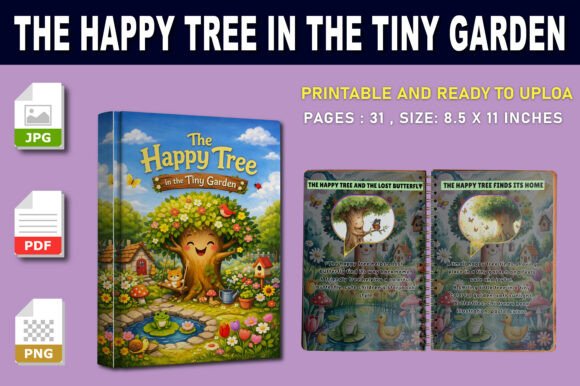
The Happy Tree in the Tiny Garden: A Story That Grows with Purpose
Stories for young children often carry a quiet weight. They are not just entertainment—they are early frameworks for how a child sees kindness, patience, and their place in the world. The Happy Tree in the Tiny Garden is one of those rare resources that feels simple on the surface but offers real depth for anyone who works with children, whether as a parent, educator, caregiver, or content creator. This article explores how this story fits into practical workflows, how it can be used before, during, and after learning moments, and how it integrates with other tools and methods to create consistent, meaningful experiences.
What the Story Offers Beyond the Page
At its core, The Happy Tree in the Tiny Garden follows a cheerful tree that becomes a friend to everyone in a small, colorful garden. It helps a lost butterfly, shares shade with children, dances in the rain, and offers sunshine to flowers. Each interaction is small, but the cumulative effect is a lesson in how kindness, patience, and gratitude work in everyday life. The narrative is gentle and predictable in the best way—young readers feel safe while learning.
For adults planning reading sessions or classroom activities, the story provides a clear structure. Each vignette functions almost like a standalone micro-lesson. This makes it easy to pause, discuss, or extend an idea without breaking the overall flow. The book also comes with editable Canva files, JPG, PNG, and PDF versions at 300 DPI, which means you can adapt the materials for digital use, print, or even create supplemental activities.
Where the Story Fits Into Planning and Preparation
Before using the story with a child or group, there is a natural preparation phase. This is where the practical value of The Happy Tree in the Tiny Garden becomes clear. Because the book includes ready-to-use PDF interiors and editable design files, you can customize elements to match your specific setting. Educators might adjust illustrations for a classroom theme. Parents might print specific pages for a bedtime routine. Publishers or content creators can use the files as a base for building lesson packs or activity books.
During preparation, consider what you want the child to take away. Is it the idea of helping others without expecting anything in return? Is it noticing small moments of beauty in nature? The story supports multiple focus areas, so you can plan ahead without needing to rewrite anything. The built-in variety—helping friends, sharing resources, expressing gratitude—gives you flexibility. You can highlight different parts of the story on different days or weeks, keeping the material fresh.
If you are a teacher planning a unit on social-emotional learning, this story fits naturally into a week about kindness or community. If you are a parent looking for a gentle way to discuss patience, the tree’s steady presence in the garden offers a concrete example. The preparation step is simply about identifying which thread to pull.
Using the Story During Active Learning or Teaching Sessions
During a reading session, the story works well as a shared experience. Read aloud with expression, and let the illustrations do some of the work. The bright, soft art style keeps young eyes engaged while the narrative moves at a pace that allows for natural pauses. You can stop after the butterfly scene and ask, “What did the tree do? How do you think the butterfly felt?” These small breaks turn passive listening into active comprehension.
For educators, the story can be integrated into a larger lesson flow. For example:
- Before reading: Show the cover and ask children what they think the happy tree might do. This builds prediction skills.
- During reading: Pause at key moments to model empathy. “The tree gave shade to the children. Why do you think that made them happy?”
- After reading: Use a simple drawing or writing prompt based on one of the story’s scenes.
The beauty of The Happy Tree in the Tiny Garden is that it does not require elaborate props or preparation. The story itself carries the weight. You can read it with a single copy or project the pages using the PDF version on a screen. It works equally well in a one-on-one bedtime setting or a circle of twenty children.
Post-Reading Activities and Long-Term Integration
What happens after the book is closed matters most. This is where the story’s lessons move from words into action. The editable files make it simple to create extension activities. You can print coloring pages of the tree and its friends, create sequencing cards, or design a simple garden scene where children add their own acts of kindness as leaves on a tree. These activities reinforce the narrative and give children a tangible way to participate.
For long-term use, revisit the story periodically. Because the themes are universal, the story does not age out after one reading. A child who heard it at age three will find new meaning at age five. You can pair it with other resources about nature, friendship, or emotional vocabulary. The story also works well as part of a rotating library of social-emotional books, where it serves as an anchor text for kindness-themed weeks.
For publishers or content creators, the provided files (Canva AI, PNG, JPG, PDF) allow you to repurpose the story into different formats. You might create a digital flipbook, a printable mini-book, or a set of classroom posters. The clean white backgrounds and 300 DPI resolution mean you can scale the images without losing quality. This makes the story a practical asset for anyone building a library of children’s content.
Practical Workflow for Educators and Parents
Here is a straightforward workflow that shows how The Happy Tree in the Tiny Garden can fit into a weekly routine:
- Sunday: Preview the story. Identify one or two themes you want to emphasize. Open the Canva files if you want to create a simple discussion guide or activity sheet.
- Monday: Read the story aloud. Focus on the first half. Pause after the butterfly and shade scenes. Ask open-ended questions.
- Tuesday: Revisit one scene in detail. Use the PDF version to project the page. Have children draw their own version of the scene.
- Wednesday: Read the second half of the story. Discuss the tree’s patience and gratitude. Connect to real-life examples from the child’s day.
- Thursday: Do a hands-on activity. Plant a seed, create a garden collage, or act out a scene from the story.
- Friday: Read the full story again. Let children lead the discussion. Ask what they would do if they were the happy tree.
This rhythm builds repetition without boredom. It also makes room for different learning styles—listening, speaking, drawing, moving, and reflecting are all included.
Adapting the Story for Creative and Publishing Projects
If you are a content creator, freelancer, or publisher, the workflow around The Happy Tree in the Tiny Garden extends beyond direct reading. The inclusion of editable AI files means you can modify the illustrations or layout to suit different platforms. For example:
- E-book production: Use the PDF or PNG files to assemble a fixed-layout e-book for Kindle Kids or similar platforms.
- Print-on-demand: The 300 DPI resolution and white backgrounds make the files print-ready. You can create a physical version with no additional design work.
- Educational bundles: Combine the story with a set of activity sheets, a teacher’s guide, or a coloring book. The consistent visual style ties everything together.
- Social media content: Extract single illustrations as standalone posts. Add a short question or prompt to engage parents and educators.
The key is that the files are not locked. You can adjust sizing, add text overlays, or combine elements from different pages. This level of control is rare in children’s content and makes the story a practical choice for anyone who needs to produce multiple assets from a single source.
Long-Term Use and Consistency
One of the challenges with children’s stories is keeping them relevant over time. The Happy Tree in the Tiny Garden avoids this problem because its lessons are foundational. Kindness, patience, gratitude, and care for nature do not become outdated. You can use the story as a consistent reference point throughout a child’s early years. When a child struggles with sharing, you can say, “Remember what the happy tree did for the butterfly?” The story becomes a shared language.
For educators, the story can anchor an entire unit on social-emotional learning. You can return to it at different points in the year, each time focusing on a different aspect. The editable files allow you to create fresh materials each time—new discussion cards, updated activity sheets, or seasonal variations. This prevents the story from feeling stale and keeps children engaged.
For publishers, the combination of story content and production-ready files means you can maintain a consistent brand across multiple products. The same tree illustration can appear on a poster, a bookmark, a sticker sheet, and a digital reading app. This visual consistency builds recognition and trust with your audience.
Observations on Usability and Integration
From a practical standpoint, The Happy Tree in the Tiny Garden works well because it respects the user’s time. The story is not overly long—it fits comfortably into a single sitting—but it has enough material to support multiple sessions. The provided file formats cover the most common use cases: print, digital, and editable. You do not need to convert anything or struggle with resolution issues.
The book also pairs naturally with other resources. If you already use a social-emotional curriculum, this story can supplement specific lessons. If you have a nature study program, the garden setting provides a gentle introduction. If you are a parent building a home library, this book fills the niche of kindness stories without being preachy or moralizing. It shows, rather than tells, how small actions create meaningful connections.
For quality control, the 300 DPI files ensure that printed materials look professional. The editable nature of the Canva files means you can make adjustments for different age groups or cultural contexts. This flexibility is especially valuable for educators working with diverse classrooms or publishers targeting international markets.
Ultimately, The Happy Tree in the Tiny Garden is more than a story. It is a practical tool that fits into real workflows, supports multiple use cases, and delivers consistent value over time. Whether you are reading it at bedtime, teaching it in a classroom, or repurposing it for a publishing project, the story provides a solid foundation that grows with you and your audience.