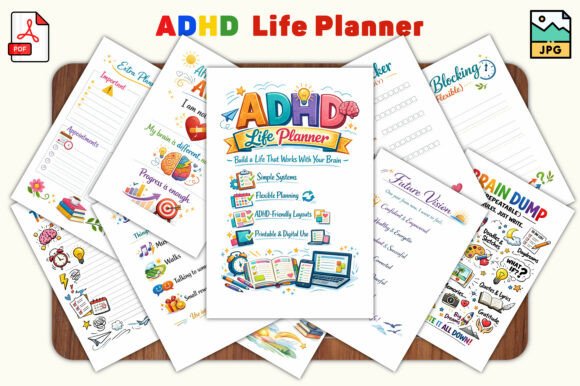
ADHD Life Planner: Build a Life That Works With Your Brain
If you’ve ever bought a beautiful planner in January only to abandon it by February, you’re not alone. The issue isn’t that you lack discipline—it’s that most planning systems are designed for linear, neurotypical workflows. They demand consistency, punish gaps, and assume you have perfect executive function. The ADHD Life Planner exists because your brain doesn’t work that way, and it shouldn’t have to.
This isn’t another rigid system that makes you feel bad for missing a day. It’s a 42-page toolkit built around flexibility, forgiveness, and actual neurological reality. Let’s talk about where, when, and why this planner becomes genuinely useful for creators, freelancers, entrepreneurs, educators, and anyone trying to keep their life from feeling like a browser with too many tabs open.
Where Standard Planners Fall Short for ADHD Minds
Most planners rely on two assumptions: that your energy levels are predictable and that you can stick to a preset schedule. For an ADHD brain, neither is true. Time blindness makes hourly schedules feel arbitrary. Executive dysfunction makes “plan your week” feel like a monumental task. And when you inevitably skip a few days, the empty boxes become a source of shame rather than structure.
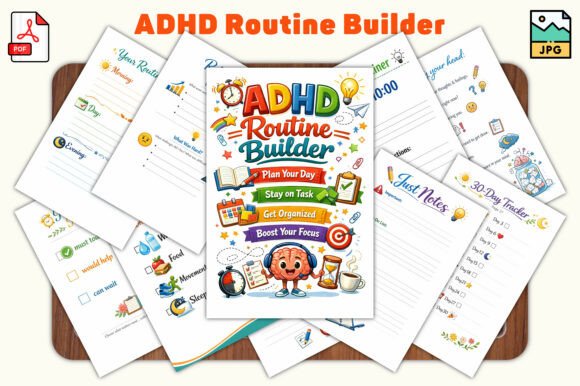
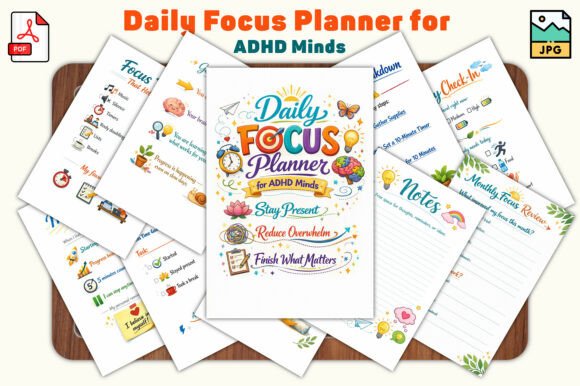
The ADHD Life Planner strips that away. There are no minute-by-minute time slots screaming at you for being late. Instead, you get micro-step breakdowns, brain dump pages, and energy tracking—tools that meet you where you actually are emotionally and mentally on any given morning. It’s built on the idea that a flexible framework beats a rigid cage every time.
The 42 pages include daily, weekly, and monthly planning sections, but they also go deeper. You get space for emotional check-ins, dopamine boosters, overwhelm resets, and burnout awareness. These aren’t fluffy extras—they’re functional responses to how ADHD brains operate under stress.
Real-World Use Cases for Creatives, Freelancers, and Entrepreneurs
Where does this planner actually fit into a chaotic day? Let’s walk through specific scenarios across different roles and routines.
Protecting Creative Flow Without Losing the Plot
If you’re a blogger, content creator, or hobbyist, you know the feeling: you’re deep in a creative flow, but that client invoice is due, and the grocery list is screaming at you from the back of your mind. The ADHD Life Planner helps you capture creative ideas without derailing your focus.
The brain dump pages act as a parking lot. When a random idea hits during a work session, you write it down in the dump space and keep going. Later, during your weekly reset, you can decide if that idea deserves project status or stays in the idea file. This prevents the classic ADHD spiral where one thought leads to four hours of research on something unrelated.
For hobbyists and makers, the energy tracking feature is especially useful. Instead of forcing yourself to work on a low-energy evening, you log where your motivation naturally peaks. You start recognizing patterns—maybe you paint best at 10 AM on weekends but crash by 3 PM. That data helps you schedule your creative time when it’s most sustainable, not just when the calendar says so.
Taming Chaos for Freelancers and Marketers
Freelancers and marketers often juggle multiple clients, deadlines, and platforms. The mental load is heavy, and traditional project management tools can feel cold and impersonal. The ADHD Life Planner brings a human touch to professional chaos.
The micro-step breakdowns are where this planner shines in a work context. A project like “launch new email campaign” is overwhelming. Breaking it into steps like “write 3 subject lines,” “choose hero image,” and “schedule first send” makes starting easy. You get the dopamine hit of checking off small wins, which builds momentum for the bigger tasks.
When overwhelm hits—and it will—the overwhelm reset pages offer a structured way to step back. You externalize everything swirling in your head onto a single page. Then, using the weekly planning section, you prioritize only the three most important tasks. It’s a permission slip to stop trying to do everything at once.
For agency owners and marketing leads, the reflection and progress pages are valuable for client reporting or internal pivots. Instead of scrambling to remember what happened last month, you have a record of energy levels, completed micro-steps, and emotional context. It makes strategy adjustments easier because you can see what actually drained you versus what energized you.
Practical Scenarios: From Overwhelm to Clarity
Let’s look at three realistic situations where this planner directly prevents the “I’ll just start fresh next Monday” cycle.
Scenario 1: The Blogger’s Content Block
You have a draft due, but your brain feels like static. You open the ADHD Life Planner to the brain dump page and write down everything cluttering your head: worries about analytics, a comment from a reader, three unrelated article ideas, and the fact that you forgot to eat lunch. Just getting it out reduces the pressure. Then, you flip to a daily planning page and set one micro-step: “Write 200 words before noon.” No pressure to finish the whole thing. Just a single, achievable chunk. That one step often breaks the logjam.
Scenario 2: The Freelancer’s Pile-Up
You have three client deadlines converging, and you’re shutting down. You grab the planner and use the overwhelm reset. You list every single task across every project. Seeing it on paper is scary, but it’s no longer invisible. Then you use the goal-setting section to assign one tiny action to each project for today. Client A gets “send updated draft,” Client B gets “reply to email about timeline,” Client C gets “create folder structure.” None of these are massive steps, but they create motion. Motion beats perfection every time when the ADHD brain is stuck.
Scenario 3: The Small Business Owner’s Burnout Cycle
You’re doing everything—accounting, marketing, customer service, product development. You’re exhausted but feel guilty resting. The planner’s self-care and burnout awareness pages force a different conversation. Instead of ignoring fatigue, you schedule rest like a task. The emotional check-ins help you realize you’ve been irritable not because of your team, but because you haven’t had a real break in two weeks. Tracking this prevents the kind of burnout that takes months to recover from.
What to Consider Before Using the ADHD Life Planner
This planner is designed to be forgiving, but it still requires some input from you to function. Here’s what you should know before you start.
It works best when you treat it as a sketchpad, not a legal document. You don’t have to fill every page. If a daily spread feels wrong, skip it and use a brain dump instead. The freedom to abandon a page without guilt is one of the planner’s core features. The repeatable pages in the 42-page set mean you can print or redownload what you actually use.
Format matters for your workflow. The planner comes in PDF and JPG formats, which gives you flexibility. Many entrepreneurs and creators use a tablet and stylus to keep it digital and adjustable. Others print a week at a time and keep it on their desk. The JPG format is useful if you want to import individual pages into a digital notebook like GoodNotes or Notability. Choose the approach that minimizes friction for your current setup.
Honesty drives the results. The emotional check-ins and energy trackers only help if you’re honest about feeling drained or unmotivated. There’s no judgment in the pages, but there has to be honesty from you. The goal isn’t to optimize yourself into a machine—it’s to understand your personal rhythms so you can work with them instead of against them.
It replaces guilt with structure. If you’re used to abandoning planners, this one asks you to abandon shame instead. The weekly reset pages are designed to let you start fresh without punishing yourself for last week’s gaps. You don’t have to “catch up.” You just move forward.
Building a Life That Fits Your Brain
The ADHD Life Planner isn’t a magic fix. It’s a practical set of tools that acknowledge a fundamental truth: ADHD brains don’t respond well to pressure, perfectionism, or rigid expectations. They respond to clarity, flexibility, and small wins. The 42 pages in this planner are structured to deliver exactly that—whether you’re planning a creative project, managing a freelance workload, or just trying to remember to eat lunch and do laundry in the same day.
The difference between a planner you abandon and a planner you actually use is whether it reflects how your brain works. This one is built to hold space for the messy, non-linear, deeply creative way ADHD minds navigate the world. It doesn’t ask you to change. It asks you to start where you are, use what you need, and keep going.