ADHD Routine Builder: Working With Your Brain Instead of Against It
If you have ever bought a planner, used it for three days, and then forgotten it existed, you are not alone. If you have told yourself “tomorrow I will get it together” more times than you can count, that is not a character flaw. You have been trying to build routines designed for neurotypical brains, and those systems quietly sabotage you from the start.
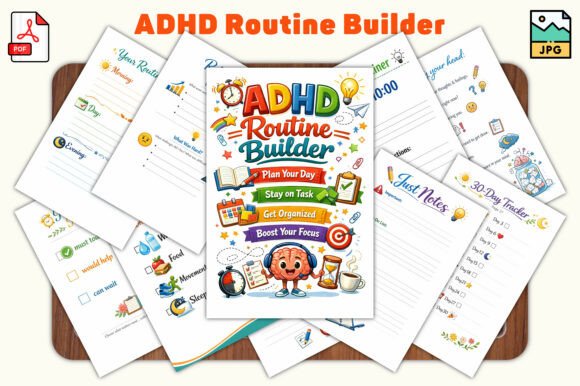
ADHD Routine Builder exists because the standard advice — wake up at 5 a.m., batch your tasks, use a bullet journal, just try harder — does not work when your executive functions operate differently. The workbook offers a genuine alternative. But even with a tool designed for ADHD minds, there are ways to undermine your own progress without realizing it. Let's talk about those pitfalls and how to avoid them.
Why Traditional Routine Systems Fail the ADHD Brain
Before diving into the workbook itself, it helps to understand why so many routine attempts fall apart. The common narrative is that you lack discipline. That is incorrect. What you lack is a system that accounts for variable energy, time blindness, and the way your motivation operates on interest rather than urgency.
Most planners assume you will remember to check them. They assume you can estimate how long a task takes. They assume you will feel the same way tomorrow as you do today. For an ADHD brain, none of these assumptions hold. ADHD Routine Builder addresses these gaps directly, but only if you use it the way it was intended — and that is where many people go wrong.
The Mistake of Treating It Like a Traditional Planner
The biggest error people make is opening the workbook and immediately trying to fill everything out in one sitting. They approach it with the same all-or-nothing energy that has burned them before. They want to fix everything right now. So they map out a perfect week, complete with morning anchors, evening routines, and task blocks. Then Tuesday hits, they skip one step, and the whole thing feels broken.
That sense of failure is not the workbook's fault. It is the perfectionism trap that ADHD brains fall into repeatedly. The workbook is designed for iteration, not perfection. It expects you to test, adjust, and restart. If you treat it as a one-and-done solution, you will recreate the same cycle of guilt you were trying to escape.
A better approach: Start with one page. Maybe the tiny habits sheet. Maybe the energy tracker. Fill out only what feels doable today. Set an intention to revisit it tomorrow. Let the workbook grow with you rather than demanding completion.
Common Misunderstandings About Task Organization
Many users come to ADHD Routine Builder hoping it will somehow make task initiation effortless. They believe that if they just organize their to-do list the right way, the paralysis will disappear. That is partly true — structure helps — but it is not the whole picture.
The workbook includes tools for breaking tasks into smaller pieces and organizing them without overwhelm. But the mistake people make is they still list too many items. They underestimate how much energy each task actually requires. They write “clean the kitchen” without specifying what that means. That single item hides fifteen smaller steps: clear counter, wipe surfaces, load dishwasher, wash hand-wash items, sweep floor, take out trash. When you look at “clean the kitchen” and feel stuck, it is not because you are lazy. It is because your brain sees the hidden subtasks and freezes.
How to avoid this: Use the workbook's task pages to go one level deeper than you think you need. Instead of “work on project,” write “open the document and write three sentences.” Instead of “exercise,” write “put on shoes and walk to the end of the block.” The smaller the entry, the more likely you are to start.
The All-or-Nothing Planning Trap
Another pattern worth watching for is the tendency to schedule every hour of the day. ADHD Routine Builder does not require rigid timetables, but some users impose them anyway out of habit. They block out morning, afternoon, and evening with specific tasks. Then when one block goes wrong — and it will — the rest of the day feels like a loss.
Rigid scheduling works against the variable energy that comes with ADHD. Some mornings you wake up focused and ready. Other mornings you cannot seem to shift into gear until noon. A schedule that does not account for that variability sets you up to feel like a failure on low-energy days, even if you still got important things done.
A more sustainable method: Use the workbook's energy tracking pages to notice when your focus naturally peaks. Schedule your most demanding tasks during those windows. Leave the rest of the day looser. Build anchors rather than schedules — a few consistent touchpoints like a morning check-in or an evening wind-down, with flexible time in between.
Restarting After an Off Day
One of the most valuable features of ADHD Routine Builder is that it explicitly addresses what to do when you fall off track. Most planners simply leave you to figure that out alone, which is why people abandon them after one missed day. The workbook includes prompts and pages designed for restarting without shame.
Yet many users skip these sections. They think they will not need them. Or they feel embarrassed to fill out a “restart” page because it feels like admitting failure. This is a mistake. The off days are not exceptions — they are part of the process. ADHD brains have variable consistency. You will have days when you forget to check the workbook. You will have weeks when everything feels hard. The restart pages are not a backup plan. They are the main plan.
How to use them well: Keep the restart pages accessible. When you miss a day or a week, do not try to catch up by filling in everything you missed. Turn directly to the restart section. Answer the prompts honestly. Let go of what you did not do and focus on what you can do right now. The workbook is designed to meet you where you are, not where you think you should be.
Tracking Energy Instead of Time
Many people misuse the tracking pages by trying to log time spent on tasks. That is a natural instinct — most productivity systems emphasize time tracking. But for ADHD brains, clock-based tracking often triggers shame. You see that a task took twice as long as you thought it would, and you feel bad about yourself. Or you forget to log altogether, and then you give up on tracking entirely.
The workbook suggests tracking energy instead, and this shift matters more than most people realize. Energy tracking focuses on how you feel before, during, and after tasks. It helps you notice patterns: maybe you always crash at 2 p.m., or maybe creative work flows best late at night. That information is far more useful than knowing you spent forty minutes on emails.
To do this well: Use the energy tracker lightly. Rate your energy on a simple scale at a few points during the day. Note what you were doing. After a week, look for patterns. Then adjust your routine to match those patterns. Let the workbook become a tool for self-discovery rather than self-judgment.
What to Check Before You Use the Workbook
Before you start filling out pages, take a few moments to set yourself up for success. First, decide whether you will use it digitally or print it. Both work, but each has tradeoffs. Digital use lets you carry it everywhere and edit easily. Print use gives you the tactile experience that many ADHD brains find grounding. If you print it, consider using a binder so you can add or remove pages without pressure.
Second, lower your expectations for how much you will complete. The workbook has thirty pages. You do not need to use them all. You do not need to use them in order. You can pick the pages that feel relevant right now and leave the rest for later. The workbook is a resource, not a curriculum. There is no test at the end. There is no wrong way to engage with it.
Third, give yourself permission to abandon pages that do not work. If a particular exercise feels confusing or frustrating, skip it. Your brain is unique. Not every tool in the workbook will fit. That is fine. The ones that do fit are worth keeping. The ones that do not can be set aside without guilt.
Building Routines That Actually Last
The ultimate goal of ADHD Routine Builder is not to turn you into a perfectly organized person who never misses a step. That person does not exist, and chasing that image will only exhaust you. The goal is to build routines that feel sustainable over months and years, not days. Routines that bend when life gets chaotic. Routines that leave room for rest, spontaneity, and the way your brain actually works.
This requires letting go of the idea that consistency means doing the same thing every single day. Consistency for an ADHD brain might mean doing something most days, or doing a simpler version on hard days, or picking it back up after a break without self-criticism. The workbook supports this kind of flexible consistency, but only if you allow yourself to embrace it.
Use the morning and evening anchor pages to create small, repeatable actions that ground your day. An anchor might be as simple as drinking a glass of water after you wake up or writing one sentence about how your day went before bed. Anchors are not big commitments. They are footholds. They keep you connected to your routine even when everything else feels scattered.
Building Self-Trust Through Small Wins
Perhaps the most important benefit of using this workbook well is the gradual rebuilding of self-trust. Many adults with ADHD have a deep-seated belief that they cannot follow through. They have tried and failed so many times that they stop believing in their own ability to stick with anything. That belief becomes a self-fulfilling prophecy.
ADHD Routine Builder offers a way out of that cycle, but it requires patience. Each tiny habit you complete — even if it is just checking the workbook once a day — sends a signal to your brain that you are reliable. Over time, those signals accumulate. You start to trust yourself again. You stop assuming you will forget. You stop planning for failure.
That shift does not happen overnight. It happens page by page, anchor by anchor, restart by restart. The workbook is a tool for that process, not a shortcut around it. Use it gently. Use it imperfectly. Use it as many times as you need to. It is designed for exactly that kind of use — not for perfection, but for becoming.
ADHD Routine Builder is not another planner that will gather dust. It is a practical, science-informed guide that meets your brain where it is. The key is to approach it with curiosity instead of pressure, flexibility instead of rigidity, and self-compassion instead of shame. When you do that, the routines you build will not just last — they will actually support the life you want to live.