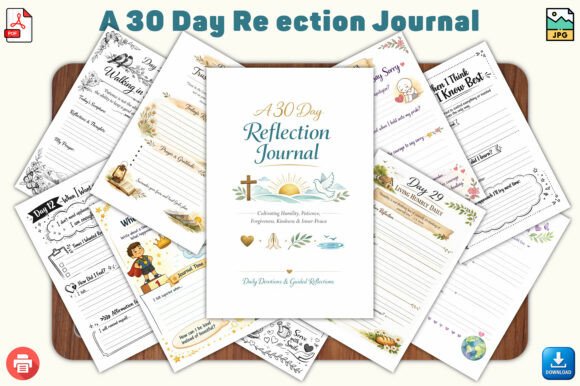
A 30 Day Reflection Journal: Your Path to Mindful Self-Discovery
In a world that rarely pauses, the desire to slow down and reconnect with yourself can feel both urgent and out of reach. Many adults carry the weight of daily responsibilities—work deadlines, family obligations, financial pressures—while quietly longing for a moment of calm. A 30 Day Reflection Journal offers a structured, gentle way to carve out that moment. It is not just a notebook; it is a compass for inner exploration, designed to help you build mindfulness, emotional balance, gratitude, and personal growth one day at a time.
What Is A 30 Day Reflection Journal?
At its core, A 30 Day Reflection Journal is a thoughtfully designed printable journal that guides you through a month of daily reflection. Each page includes calming prompts, thoughtful reflection questions, and generous writing space. The format—a clean, minimal, 6×9 inch layout—is intentionally uncluttered, allowing your thoughts to take center stage. Whether you use it as a devotional practice, a mental wellness tool, or a self-care ritual, this journal provides the framework for creating meaningful daily habits that foster deeper self-awareness and personal transformation.
The journal comes in high-resolution PDF and JPG formats, print-ready at 300 DPI, and is suitable for both personal use and commercial PLR projects. Its elegant design makes it ideal for Amazon KDP publishing, Etsy or Creative Fabrica digital downloads, or simply printing for your own reflection practice.
The Real Challenges of Staying Connected to Yourself
Even with the best intentions, maintaining a consistent reflection practice is harder than it sounds. You might recognize some of these common obstacles:
- Time scarcity. Between work, family, and social commitments, finding even ten minutes for yourself can feel impossible.
- Mental clutter. When your mind is racing with to-do lists and worries, sitting down to reflect can feel overwhelming rather than calming.
- Lack of direction. Open-ended journaling often leads to staring at a blank page, unsure where to start.
- Inconsistency. You might begin with enthusiasm, but without structure, the habit fades after a few days.
- Emotional resistance. Sometimes, avoiding difficult feelings is easier than facing them head-on.
These challenges are not signs of failure—they are normal responses to a fast-paced, demanding life. The key is finding a tool that meets you where you are, without adding pressure or judgment.
How This Journal Helps You Overcome Those Hurdles
A 30 Day Reflection Journal is built to address these exact struggles. Instead of leaving you to figure out what to write, it provides a daily prompt and a thoughtful question that gently guides your reflection. This structure removes the guesswork and reduces the mental energy needed to begin. You simply open the journal, read the prompt, and let your thoughts flow.
The 30-day format also builds momentum. Day one might ask you to name one thing you are grateful for. Day five invites you to explore a quality you admire in yourself. Day fifteen encourages you to revisit a challenge and see what you learned from it. This gradual progression helps you ease into deeper self-exploration without feeling rushed or exposed. Over the course of a month, you develop a rhythm that turns reflection from a chore into a cherished part of your day.
For those who struggle with emotional resistance, the gentle language of the prompts—phrases like "softly consider" or "in this moment"—creates a safe container. You are not forced to dig into painful memories on day one. Instead, you build trust with yourself, and the journal becomes a compassionate witness to your inner world.
Practical Applications and Real Outcomes
The beauty of A 30 Day Reflection Journal lies in its versatility. Different users will find different paths to value, but several outcomes are common across many experiences.
Building Emotional Balance
By writing daily, you create a record of your emotional landscape. Over 30 days, patterns emerge. You might notice that certain situations trigger anxiety, or that you feel most peaceful in the morning. This awareness is the first step toward regulation. When you know what affects your emotional state, you can make intentional choices—like adjusting your morning routine or setting boundaries around specific stressors.
Deepening Gratitude
Several prompts in the journal focus on gratitude, but not in a superficial way. Instead of simply listing things you are thankful for, the questions invite you to explore why those things matter and how they shape your day. This reflective gratitude practice has been shown to improve mood, increase resilience, and even strengthen relationships.
Reconnecting with Your Inner Self
Many adults lose touch with their own needs and desires amid the demands of daily life. This journal creates space for you to ask questions like, "What brought me joy today?" and "What does my inner self need right now?" Over time, these questions help you rediscover your authentic preferences, values, and aspirations—leading to more aligned decisions and greater life satisfaction.
Supporting a Devotional or Spiritual Practice
For those who approach the journal as a devotional tool, the prompts can be paired with prayer, meditation, or scripture reading. The reflection questions become a way to process spiritual insights and apply them to daily life. This integration makes faith more tangible and personal, rather than abstract or distant.
Different Approaches for Different Users
No two journeys through A 30 Day Reflection Journal will look exactly alike. That is by design. Here is how different people might use the same journal to meet their unique needs:
- The busy professional might use it as a five-minute wind-down ritual before bed. They focus on one prompt, write a short response, and use the act of writing to signal to their brain that the workday is over.
- The creative or writer might treat the prompts as warm-up exercises. They expand their responses into longer reflections, stories, or poems, using the journal as a springboard for creative projects.
- The person in recovery or therapy might use the journal to track emotional patterns between sessions. The prompts offer a gentle, non-clinical way to process feelings and identify topics to discuss with their therapist.
- The parent or caregiver might use it as a form of micro-self-care. Even if they only have time for one sentence per day, the act of showing up for themselves builds a foundation of self-worth that benefits everyone around them.
- The entrepreneur or content creator might purchase the PLR version to customize and sell as their own product. They can add their branding, tweak prompts, or bundle it with other resources to create a unique offering for their audience.
Tips for Getting the Most Out of Your 30 Day Journey
To truly benefit from A 30 Day Reflection Journal, consider these practical recommendations:
- Choose a consistent time and place. Whether it is morning coffee or evening tea, pairing your journaling with an existing habit makes it easier to remember. A dedicated spot—a cozy chair, a corner of your desk—signals to your brain that it is time to reflect.
- Write without editing. The journal is for your eyes only. Let your thoughts pour out without worrying about grammar, spelling, or coherence. The goal is expression, not perfection.
- Be honest, even when it is uncomfortable. Growth often lives on the other side of discomfort. If a prompt stirs up strong feelings, lean in. You can always pause, take a breath, and return later.
- Review your entries at the end of the month. After 30 days, read through your journal from start to finish. Notice recurring themes, shifts in perspective, and moments of insight. This retrospective view is one of the most powerful parts of the practice.
- Adapt it to your season of life. If you miss a day, simply pick up where you left off. The journal is not a test of discipline; it is a tool for connection. Be flexible and compassionate with yourself.
Why This Journal Works for Long-Term Growth
Unlike a one-time workshop or a fleeting inspiration, A 30 Day Reflection Journal builds a habit that can sustain you far beyond the month itself. The 30-day structure is long enough to create momentum but short enough to feel achievable. Many users find that by day 30, they have developed a natural desire to continue reflecting—sometimes with the journal, sometimes through other practices like meditation, conversation, or creative expression.
The journal also respects your individuality. It does not prescribe a single path or demand a specific outcome. Instead, it offers a container for your unique process. Whether you are navigating a major life transition, recovering from burnout, or simply wanting to know yourself better, the journal meets you with open, blank pages and a gentle question: What is here for you today?
For those who choose the PLR route, this journal also offers a meaningful business opportunity. You can resell it, bundle it with other self-growth resources, or use it as a lead magnet to build your email list. Its clean, professional design and universal appeal make it a versatile asset for anyone in the personal development or publishing space.
Start Where You Are
You do not need to have your life together to begin using A 30 Day Reflection Journal. You do not need to be a skilled writer, a seasoned meditator, or someone who already has a thriving self-care practice. All you need is a willingness to pause, a desire to connect with yourself, and the courage to put one thought on paper.
The journal is ready—high-resolution, beautifully formatted, and waiting for your words. The only question is whether you are ready to give yourself the gift of 30 days of intentional reflection. If you are, the pages will meet you with warmth, space, and a quiet invitation to begin.