2026–2027 Anxiety Relief Self-Care
Navigating the demands of creative work, entrepreneurship, and content creation often means carrying a mental load that rarely gets a break. The pressure to produce, market, and stay visible can quietly feed a cycle of stress and worry that drains both energy and joy. The 2026–2027 Anxiety Relief Self-Care Journal steps into that space not as another productivity tool, but as a grounded, structured companion for anyone who needs to slow down, name what they are feeling, and build habits that actually support emotional balance. This is not a vague collection of inspirational quotes. It is a two-year guided planner built around therapy-based exercises, exposure tracking, mindfulness prompts, and practical reflection pages that help you move from overwhelmed to aware.
What Makes the Journal Stand Out
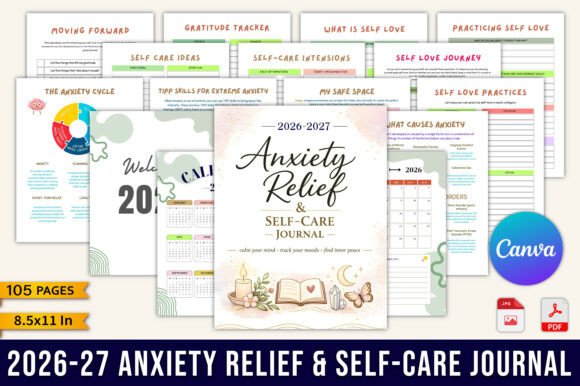
On first glance, the journal presents a clean, uncluttered design that prioritises function over decoration. The layout uses generous white space, clear section breaks, and a muted, calming colour palette that feels reassuring rather than demanding. Every page is intentional—there are no busy graphics or loud typography competing for your attention. Instead, the visual personality is quiet, professional, and quietly supportive, much like a trusted colleague who listens without judgment. The paper quality is sturdy enough to withstand daily use and the occasional tear, and the binding lies flat so you can write comfortably whether you are at a desk, on a couch, or sitting outside. This is a tool you can bring into your real life without it feeling like extra clutter.
The journal covers far more than simple to-do lists. It includes a thorough breakdown of what anxiety actually is, how triggers form, and how the anxiety cycle perpetuates itself. There are sections on exposure therapy, progressive muscle relaxation, breathing techniques, and TIPP skills for moments of extreme distress. You will find guided prompts for naming fears, tracking exposure results, and building a coping toolbox that feels personal rather than prescribed. The inclusion of a dream journal, SMART goal setting, a vision board page, and quarterly goals means you are not just managing symptoms—you are also investing in the life you want to build. The 5-minute journal-style pages and weekly gratitude prompts offer quick anchors for days when time or energy is scarce.
How the Journal Supports Your Creative and Professional Life
For designers, marketers, writers, and small business owners, the line between personal well-being and professional output is thin. When your mind is scattered, your work suffers. When your work stresses you out, your mind pays the price. The 2026–2027 Anxiety Relief Self-Care Journal helps break that loop by giving you a structured place to untangle your thoughts before they derail your day. The daily planner pages are designed to be realistic—not packed with hourly slots that induce guilt, but spacious enough to note priorities, mood, and one small act of self-care. This matters because when you are running a brand, managing clients, or publishing regularly, your emotional state becomes part of your professional equity. A calm, clear mind produces stronger concepts, better copy, and more authentic connections with your audience.
The monthly positivity pages and weekly reflection prompts encourage you to look back at what worked and what drained you, which is invaluable for anyone who needs to iterate on their own workflows. Entrepreneurs and content creators often move so fast that they skip the reflection step entirely. This journal builds it in as a non-negotiable part of the process. Over two years, those small observations compound into real insight about your patterns, triggers, and strengths.
The Role of Design in Emotional Readability
One of the most thoughtful aspects of this journal is how its design influences your ability to engage with it honestly. When you are feeling anxious, the last thing you need is a page that feels chaotic or visually noisy. The typography and layout choices here support a gentle visual hierarchy—headlines are clear but not shouty, prompts are easy to scan, and there is enough room to write freely without feeling cramped. This is a mark of good design: it disappears when you need to focus. The journal does not try to impress you with elaborate flourishes. Instead, it earns trust through consistency, clarity, and a tone that feels both professional and warm.
For anyone who works with visual media—whether you design logos, build websites, or produce social graphics—this journal offers a quiet lesson in how layout and spacing can affect emotional response. The same principles you apply to your own projects are at work here: generous margins, intentional breathing room, and a palette that soothes rather than stimulates. This alignment between form and function is what makes the journal feel like a premium tool rather than a throwaway notebook. It respects your time and your emotional state.
Practical Guidance for Getting the Most Out of It
If you are considering adding the 2026–2027 Anxiety Relief Self-Care Journal to your routine, start by flipping through the entire book once. Get a sense of the sections and how they connect. You do not have to fill every page in order. Some weeks, the daily planner and a single gratitude entry will be enough. Other weeks, you might spend twenty minutes on the exposure tracking or the worst-case scenario coping prompts. Let your current mental state guide your use, not a sense of obligation.
The journal is structured to work across two full years, which means you can move at a pace that feels sustainable. If you skip a month, you pick it back up without guilt. The section on anxiety education is worth reading even if you think you already understand your triggers—it frames concepts clearly enough to share with a partner, friend, or therapist. The coping toolbox pages are especially useful for creative professionals who need quick, portable strategies before a meeting, a presentation, or a deadline.
Consider pairing the journal with a simple pen that feels good in your hand and a consistent time of day—maybe ten minutes in the morning with coffee or a few minutes before bed. The structure is already there; you just need to show up. Over the course of two years, the small daily entries accumulate into a personal archive of growth, resilience, and honest self-awareness. That kind of record is rare and valuable, especially for anyone whose work depends on staying creatively sharp and emotionally grounded.
Who Will Benefit Most
This journal speaks directly to adults in their twenties, thirties, and forties who are building careers, managing households, and trying to hold space for their own well-being. It is especially relevant for people who work independently—freelancers, consultants, artists, and small business owners—because it acknowledges that self-care is not a luxury but a foundation for sustainable output. The tone never feels clinical or detached; it reads like someone who understands what it means to feel stuck, scared, or exhausted and offers a practical way forward.
If you have tried other journals and found them either too fluffy or too rigid, this one strikes a rare balance. It is grounded in real therapeutic methods but packaged in a way that feels accessible for daily life. The two-year span also means you are not racing against a deadline. You are building a practice, not completing a project. That shift in mindset alone can reduce a lot of the pressure that comes with trying to "fix" yourself in thirty days.
The 2026–2027 Anxiety Relief Self-Care Journal is the kind of tool that quietly earns a permanent place on your desk. It does not promise to erase anxiety—nothing does—but it gives you a structured, compassionate way to navigate it. For anyone who wants to understand their emotions better, build healthier habits, and keep creating without burning out, this journal is worth the space it will occupy in your bag and in your routine.