Why Your KDP Notebook Cover Could Be Hurting Your Sales (And How to Fix It)
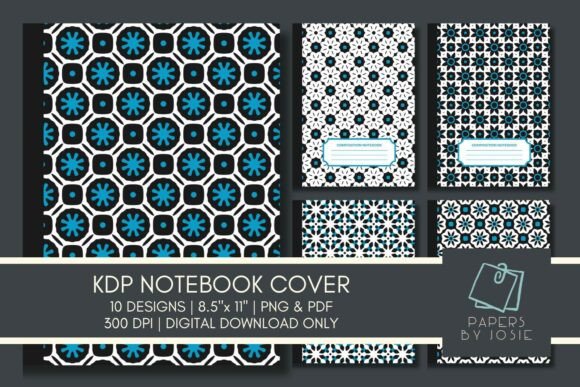
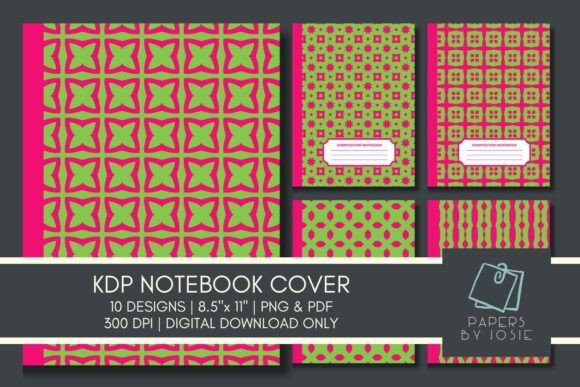
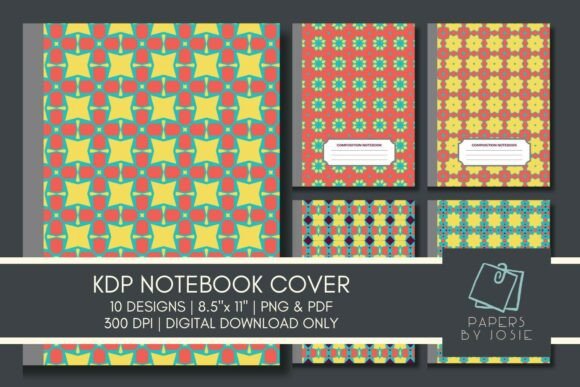
If you are building a business on Amazon KDP, you already know that notebook covers are one of the most competitive categories. Among the thousands of options, Geometric Pattern KDP Notebook Cover designs consistently attract buyers looking for clean, modern, and professional aesthetics. But here is the overlooked reality: a beautiful design alone will not sell notebooks. Many sellers pick the wrong format, overlook technical specifications, or misunderstand what buyers actually want. This article walks through the most common mistakes, what to check before you publish, and how to make your KDP COMPOSITION NOTEBOOK COVER 10 KDP composition notebook cover set work effectively for your business.
What a Geometric Pattern Notebook Cover Actually Does for Your KDP Business
A geometric pattern cover brings structure, symmetry, and visual appeal. Buyers browsing Amazon for composition notebooks are often educators, students, freelancers, or professionals who want something that looks intentional. A good geometric design communicates order and creativity at the same time. But Geometric Pattern KDP Notebook Cover sets, like the one described with 10 unique designs, college ruled interior, 120 pages, and 8.5 x 11 trim size, are only valuable if you understand how to use them correctly. Many sellers jump in thinking any attractive cover will perform well. That assumption leads to wasted time and poor results.
Mistake 1: Ignoring the Interior Specifications
One of the most common oversights occurs when sellers focus entirely on the cover design and barely glance at the interior. The product description includes college ruled interior 120 pages and 8.5 x 11 trim. These specifications are not optional details. College ruling means lines spaced 7.1 mm apart, which is standard for older students and adults. If your target audience expects wide ruling but you deliver college ruled, reviews will reflect the mismatch. Similarly, 120 pages at 8.5 x 11 creates a specific thickness and spine width. If you publish without verifying that the cover template matches the exact page count and trim size, your cover will stretch or crop incorrectly.
Better approach: Always download the provided PNG and PDF files and test them against Amazon KDP’s cover calculator before uploading. Confirm that the 300 DPI resolution holds up when scaled. A blurry cover signals low quality to buyers and lowers conversion rates.
Mistake 2: Treating 10 Designs as a Single Product
The KDP COMPOSITION NOTEBOOK COVER 10 KDP composition notebook cover set offers ten distinct geometric patterns. Some sellers make the error of using all ten designs under one ASIN, cycling through them randomly or using them across different products without strategic planning. This dilutes your brand and confuses customers. A buyer who purchases a notebook with one pattern and sees a different design in the same listing may feel misled, especially if the images are not clearly labeled.
Better approach: Use each design as a separate product listing or series with a consistent theme. This allows you to target different search terms and buyer preferences. One buyer might prefer bold geometric shapes while another wants minimalist lines. By separating the designs, you also gain more product real estate on Amazon, which increases your overall visibility. If you keep them together, clearly display each design in the product images and use the 1 ZIP File you received to organize files by design name so you never mix them up.
Mistake 3: Overlooking the Digital Only Restriction
The product description states Digital download only. This means you receive a ZIP file containing PNG and PDF files, not printed notebooks. Sellers who expect pre-formatted ready-to-upload files sometimes miss that they must still adjust margins, add their own copyright pages, and verify bleed settings. Relying on the files as-is without modifications can lead to rejection during KDP review.
Better approach: Open the downloaded ZIP file, extract the files, and import them into your preferred design software. Check that the PDF file includes bleed allowances (typically 0.125 inches on each side). If not, add them. Also insert a blank page at the beginning and end to meet KDP’s minimum page requirements. The college ruled interior 120 pages needs to account for these extra pages, so adjust your total page count accordingly before publishing.
What to Check Before You Publish
Before uploading any Geometric Pattern KDP Notebook Cover design to KDP, verify several technical points that directly affect your product’s performance:
- DPI and resolution: Confirm that your PNG files are truly 300 DPI at 8.5 x 11 inches. Low resolution causes pixelation, which looks unprofessional.
- File type usage: Use PDF for the interior and PNG or PDF for the cover. KDP accepts both, but PDF preserves vector quality better for text-heavy interiors.
- Interior matching: The college ruled interior must align with the 120 pages count. Count the actual numbered pages in the PDF and include title, copyright, and blank pages in the total.
- Cover wrap: For perfect-bound notebooks, the cover wraps around the spine and back. Make sure your geometric pattern extends correctly to the back cover and spine area, not just the front.
Mistake 4: Choosing Style Over Substance for the Interior
Geometric patterns often look modern and sleek on the cover, but if the interior feels cheap or inconsistent, buyers will not return. Some sellers spend hours selecting a striking Geometric Pattern KDP Notebook Cover but reuse a generic, poorly formatted interior. The college ruled interior 120 pages in this set should have consistent line spacing, adequate margins, and a clean layout. Buyers notice crooked lines, uneven margins, or faint printing guidelines that were not removed.
Better approach: Inspect every page of the interior PDF before publishing. Look for stray marks, misaligned rules, or inconsistent spacing. Use a ruler tool in your software to confirm exact measurements. If the interior was not created by you, verify it meets your quality standards. Customers who buy a notebook for note-taking, journaling, or classroom use expect a functional, dependable interior. A stylish cover paired with a sloppy interior damages your reputation.
Mistake 5: Ignoring the Competition and Pricing Strategy
Many KDP sellers launch a composition notebook without researching what similar products cost. An 8.5 x 11 college ruled notebook with 120 pages typically falls in a competitive price range. If you price too high based solely on the design, you limit your potential customers. If you price too low, buyers may question quality. The KDP COMPOSITION NOTEBOOK COVER 10 KDP composition notebook cover set gives you an advantage because you can create multiple listings. However, each listing still needs a competitive price point that reflects the design value without exceeding what buyers expect for a standard composition book.
Better approach: Search Amazon for terms like “8.5 x 11 college ruled composition notebook” and note the price range of products with similar page counts and cover quality. Set your price within that range, then differentiate your listing through the geometric design and professional presentation. Use the 300 DPI and clean interior as selling points in your bullet points. If customers see a polished product at a fair price, they are more likely to choose yours over a plain cover.
How to Use the ZIP File and Digital Downloads Efficiently
The 1 ZIP File containing PNG and PDF types is meant to simplify your workflow. But if you do not organize it immediately, you will waste time later. Sellers who download the file and leave it in a cluttered folder often lose track of which design matches which version or whether they already used a particular pattern.
Better approach: Create a dedicated folder structure as soon as you receive the ZIP. Name each folder after the design pattern or a unique identifier. Keep a master spreadsheet listing each design, its file name, the ASIN you assign it to, and the publication date. This habit prevents duplicate uploads and helps you track performance per design. Since digital download only means no physical goods to manage, your organization system becomes your primary asset for scaling.
Practical Advice for Using Geometric Patterns Effectively
Geometric patterns appeal to buyers who want structure and aesthetics. But they also carry a risk: if the pattern is too busy or visually overwhelming, it may not photograph well in Amazon’s listing images. Thumbnails are small, and a pattern that looks great at full size can appear chaotic at a glance.
- Test the thumbnail size: Shrink one of your cover images to about 200 pixels wide and see if the geometric design remains recognizable. If it becomes a blurry mess, simplify the pattern or adjust contrast.
- Use contrasting colors: Geometric shapes need clear color separation to read well at small sizes. Light backgrounds with dark lines or vice versa work best.
- Include a mockup: Show the geometric cover on a real notebook in your product images. This helps buyers visualize the product and reduces uncertainty.
- Keep the spine relevant: The spine of an 8.5 x 11 notebook is wide enough to display a smaller geometric element or a label. Do not leave it blank. Use the Geometric Pattern KDP Notebook Cover design to create continuity across front, spine, and back.
Mistake 6: Assuming One Design Fits All Audiences
The set of 10 beautiful and unique cover designs can serve different buyer segments, but only if you tailor each listing accordingly. Some geometric patterns lean masculine, others feminine, others neutral. If you publish all ten under the same generic keywords, you miss the chance to attract specific audiences. For instance, a pattern with sharp triangles and dark colors might appeal to architects or engineers, while soft overlapping circles in pastel tones could attract journaling enthusiasts.
Better approach: Before uploading each design, write a separate product description that speaks to the intended user. Use keywords that match their search behavior. For one pattern, include terms like “architect sketchbook” or “engineering notebook.” For another, use “creative journal” or “teacher lesson planner.” This targeting increases relevance and improves your click-through rate. The KDP COMPOSITION NOTEBOOK COVER 10 KDP composition notebook cover set becomes a versatile toolkit rather than a single product.
Final Checks Before You Hit Publish
Before submitting any listing, review these final details:
- Preview the cover on all devices: Use Amazon’s preview tool to see how your geometric pattern looks on mobile and desktop. Adjust if necessary.
- Verify the college ruled line color: Lines should be blue or gray, not black, to avoid distracting from handwriting. Ensure the college ruled interior 120 pages uses a standard line color.
- Check the back cover: Include a simple repeated geometric motif, a brand logo, or a barcode placeholder. An empty back cover looks incomplete.
- Test the PDF upload: Upload your PDF to KDP and ensure it renders correctly without missing fonts or formatting errors. The 300 DPI specification should hold across all pages.
By taking the time to address each of these areas, you transform a set of cover designs into a reliable source of income. The Geometric Pattern KDP Notebook Cover product you purchased is only as good as the care you put into publishing it. Avoid shortcuts, verify every specification, and treat each design as a separate opportunity to connect with a buyer who values clean, modern, functional notebook products. Your KDP business deserves that level of attention, and your customers will reward it with better reviews and repeat purchases.