Financial Fluency for Visual Designers
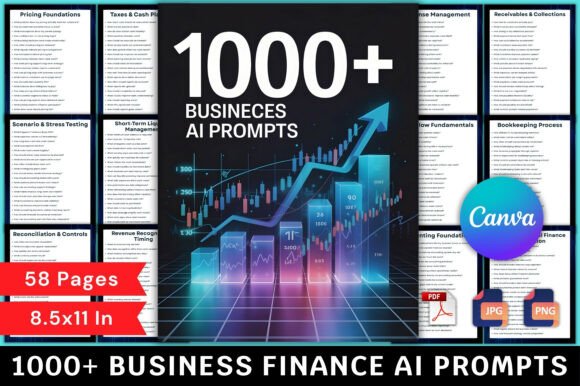
Great design is driven by great strategy. The 📊 1000 Business Finance AI Prompt provides exactly this strategic backbone, helping creatives connect their visual design choices with the real-world business goals of their clients. Whether you are building a brand identity from scratch or refining a color palette for a product launch, understanding the financial context behind the project elevates your work from decorative to essential. This planner offers 1000 structured prompts covering everything from pricing and cash flow to growth strategy and behavioral insights, making it an invaluable creative asset for any professional design workflow.
Bridging Business Strategy and Brand Identity
The most memorable logo design and packaging design are rooted in a deep understanding of the market. By exploring prompts related to unit economics and risk management, you gain clarity on what the business truly needs from its visual communication. This knowledge allows you to propose typography systems, modern aesthetics, and visual hierarchy frameworks that are not just beautiful, but strategically aligned with the brand's financial health and growth trajectory. It transforms your design inspiration into a powerful business tool.
Practical Applications Across Design Disciplines
Here is how integrating these strategic prompts into your research phase can improve specific creative projects:
- Branding & Logo Design: Use prompts on target audience and pricing psychology to ensure your brand identity resonates with the right customers and supports the product's market position.
- Digital Marketing & Social Media: Apply prompts on customer acquisition cost to design advertising campaigns and social media graphics that maximize impact and engagement for every dollar spent.
- Web Design & UI/UX: Leverage prompts about user journey and conversion to create UI design and UX design that prioritize usability and drive measurable business results.
- Print & Editorial Design: Use budget-conscious prompts to make smart decisions about print design production, ensuring your editorial design maintains a professional presentation while respecting financial constraints.
How Financial Prompts Sharpen Your Design Workflow
Incorporating structured thinking into your graphic design practice does not stifle creativity; it gives it direction. When you understand the risk factors and cash flow realities of a startup versus an established enterprise, your approach to visual design naturally adapts. You learn to prioritize consistency and scalability in your creative assets, ensuring the brand identity you craft can grow seamlessly with the business. This level of strategic thinking is what separates good designers from indispensable business partners.
For example, when working on packaging design, understanding the product's pricing tier helps you choose materials and finishes that reflect the right level of quality without blowing the budget. In web design, knowing the target conversion rates helps you design a user interface that guides visitors effortlessly toward a goal. Every design trend you leverage or color palette you choose can be validated through the lens of business strategy.
Building a Future-Proof Creative Practice
The 📊 1000 Business Finance AI Prompt resource provides a modular approach to learning and application. You might use specific prompts to prepare for a client pitch or dive into a full module to restructure your own freelance business finances. Aligning your design goals with audience expectations and business realities ensures that your work remains relevant, impactful, and highly valued. Whether you are an independent designer, a creative director, or a business owner handling your own marketing, this resource helps you think clearly, plan confidently, and design with purpose. It bridges the gap between creativity and commerce, allowing you to produce work that is not only visually stunning but also strategically sound.
By making financial literacy part of your design workflow, you ensure that every typography choice, every visual hierarchy decision, and every creative project contributes directly to the bottom line. This is the future of graphic design: a discipline where modern aesthetics and professional presentation meet data-driven strategy and financial intelligence.